


Ethics/Professional Responsibility
Apr. 21, 2017
Prohibited discrimination,harassment and retaliation (Rule 8.4.1)
See more on Prohibited discrimination,harassment and retaliation (Rule 8.4.1)Rule 8.4.1 will be a truly effective disciplinary deterrent to discriminatory conduct in the legal profession in California. By Karen Valentia Clopton


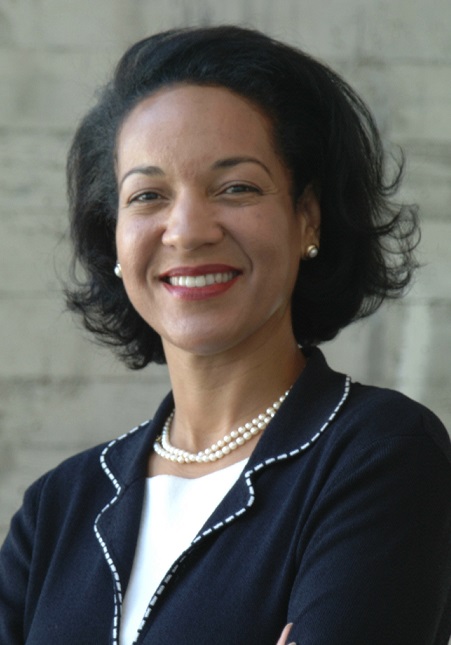
Karen Valentia Clopton
Chief Administrative Law Judge
California Public Utilities Commission
505 Van Ness Ave
San Francisco , CA 94102
Phone: (415) 703-2008
Fax: (415) 703-1723
Email: kvc@cpuc.ca.gov
Antioch School of Law
Karen is a member of the Commission for the Revision of the Rules of Professional Conduct and served on the drafting team for Proposed Rule 8.4.1.
Special Coverage
PROPOSED RULES OF PROFESSIONAL CONDUCT
The Commission on the Revision of the Rules of Professional Conduct, comprised of 25 members, including only one African-American woman (myself), overwhelmingly voted to recommend the revised and updated anti-discrimination Proposed Rule 8.4.1 to the Board of Trustees and the California Supreme Court. Only one member of the commission dissented. During the commission's deliberations, the American Bar Association adopted amendments to Model Rule 8.4 to add a new section (g) and accompanying comments that would make it professional misconduct for a lawyer to discriminate against clients or employees based on any prohibited bases in conduct related to the practice of law.
Four major changes from California's current rule addressing discriminatory conduct, Rule 2-400, were proposed. The new rule follows the ABA's proposed Rule 8.4 addressing professional misconduct in general, and rather than being subsumed into 8.4, the Rule 8.4.1 stands alone and updates and expands the current rule, as follows:
Unlawful Discrimination
Rule 8.4.1 prohibits unlawful discriminatory or harassing conduct generally in the course of representing a client. This reflects the State Bar's mission of public protection and the administration of justice. For a profession dedicated to enforcing the rule of law, it is appropriate to impose a professional obligation that requires lawyers not to unlawfully discriminate or harass while engaged in the core conduct of that profession, representing clients.
This rule is particularly important given that the membership of the State Bar of California does not reflect the racial, ethnic and gender diversity of the 41 million residents of the state. The over 200,000 licensed California attorneys are predominantly self-identified as "white," while the population is majority "non-white."
Any concern that 8.4.1 may pose First Amendment issues is addressed by the requirement in the rule itself that conduct be "unlawful" by reference to applicable federal and state statutes and decisions.
Expanded Protected Class
The new rule prohibits unlawful discriminatory or harassing conduct on the basis of protected characteristics beyond those referenced in Rule 2-400 to update and reflect current California law, specifically the California Fair Employment and Housing Act (FEHA). The proposed rule adds a definition of "protected characteristic" that is consistent with current California law and that also includes a catchall for any "other category of discrimination prohibited by applicable law."
Lawyers are obligated to obey the law as are non-lawyers. This addition permits professional discipline under whatever applicable anti-discrimination laws might exist in the future without the need to further amend this rule.
Unlawful Retaliation
Rule 8.4.1 prohibits unlawful retaliation consistent with the FEHA. Lawyers are obligated to obey the law as are non-lawyers, and this addition would permit professional discipline where a lawyer, in representing a client or in the management or operation of a law firm, unlawfully retaliates against a person because the person has taken action to oppose unlawful discrimination or harassment.
This provision provides additional protection for those obligated by the rule itself, which includes lower level lawyers within a law firm, to advocate corrective action where they know of unlawful discrimination or harassment within the firm, even if committed by higher level lawyers within the firm.
Removes Enforcement Restrictions
The new rule eliminates 2-400's requirement that there be a final civil determination of wrongful discrimination before a disciplinary investigation can commence or discipline can be imposed. This essential change confers the State Bar and its Office of Chief Trial Counsel original jurisdiction to investigate and prosecute any claim of discrimination that is described as coming within the scope of this rule under the current procedures of the disciplinary system.
Current Rule 2-400(C) is unduly restrictive of State Bar efforts to address discriminatory, harassing or retaliatory conduct and discipline, and is inconsistent with the desired emphasis that lawyers in particular must refrain from such conduct. No other rule in the California Rules of Professional Conduct contains a similar limitation on State Bar original jurisdiction. Such a limitation undermines the rule's effectiveness and circumvents the ability of employees and clients of lawyers to file complaints. It also inappropriately detracts from the intended message of the proposed rule that unlawful discriminatory conduct should provide a basis for discipline
In 1990, the Judicial Council's Subcommittee on Gender Bias in the Courts recommended promulgation of a rule of professional conduct prohibiting employment discrimination. In addition, in 1989, 1991 and 1992, the Conference of Delegates of the State Bar approved resolutions recommending State Bar promulgation of a new rule that would subject attorneys to discipline for discrimination, including discrimination in the acceptance and termination of clients. In response, the State Bar prepared Rule 2-400, which was adopted by the board in March 1993, and approved by the Supreme Court, effective March 1, 1994. The infamous clause (C) was added as a compromise which rendered the rule entirely ineffective as evidenced by the fact that not a single complaint has been prosecuted in the 23-year history of the rule.
Rule 8.4.1 will be a truly effective disciplinary deterrent to discriminatory conduct in the legal profession in California; an educational tool to teach lawyers about California's anti-discrimination statutes; and a bellwether for other states. Given the shifting population demographics and the State Bar's commitment to public protection and the administration of justice, fairness and access, Rule 8.4.1 is a welcome opportunity for the Supreme Court to confirm its commitment to these core values.
Some have taken up the voice of the lone dissenter on the commission, who champions the status quo, and as a result the Board of Trustees voted 6-6 and State Bar President James P. Fox voted in favor of sending Rule 8.4.1 to the California Supreme Court to break the tie. The Legislature, however, might also be interested in this important anti-discrimination rule and ensuring that the California Business and Professions Code mandates discipline for discriminatory practices by lawyers without the fatal predicate that has effectively prevented discipline for the last quarter century.
Rule 8.4.1 Prohibited Discrimination, Harassment and Retaliation
(Proposed rule adopted by the board March 9, 2017)
(a) In representing a client, or in terminating or refusing to accept the representation of any client, a lawyer shall not:
(1) unlawfully harass or unlawfully discriminate against persons* on the basis of any protected characteristic; or
(2) unlawfully retaliate against persons.
(b) In relation to a law firm's operations, a lawyer shall not:
(1) on the basis of any protected characteristic,
(i) unlawfully discriminate or knowingly* permit unlawful discrimination;
(ii) unlawfully harass or knowingly* permit the unlawful harassment of an employee, an applicant, an unpaid intern or volunteer, or a person* providing services pursuant to a contract; or
(iii) unlawfully refuse to hire or employ a person,* or refuse to select a person* for a training program leading to employment, or bar or discharge a person* from employment or from a training program leading to employment, or discriminate against a person* in compensation or in terms, conditions, or privileges of employment; or
(2) unlawfully retaliate against persons.
(c) For purposes of this rule:
(1) "protected characteristic" means race, religious creed, color, national origin, ancestry, physical disability, mental disability, medical condition, genetic information, marital status, sex, gender, gender identity, gender expression, sexual orientation, age, military and veteran status, or other category of discrimination prohibited by applicable law, whether the category is actual or perceived;
(2) "knowingly permit" means to fail to advocate corrective action where the lawyer knows* of a discriminatory policy or practice that results in the unlawful discrimination or harassment prohibited by paragraph (b);
(3) "unlawfully" and "unlawful" shall be determined by reference to applicable state and federal statutes and decisions making unlawful discrimination or harassment in employment and in offering goods and services to the public; and
(4) "retaliate" means to take adverse action against a person* because that person* has (i) opposed, or (ii) pursued, participated in, or assisted any action alleging, any conduct prohibited by paragraphs (a)(1) or (b)(1) of this rule.
(d) A lawyer who is the subject of a State Bar investigation or State Bar Court proceeding alleging a violation of this rule shall promptly notify the State Bar of any criminal, civil, or administrative action premised, whether in whole or part, on the same conduct that is the subject of the State Bar investigation or State Bar Court proceeding.
(e) Upon being issued a notice of a disciplinary charge under this rule, a lawyer shall:
(1) if the notice is of a disciplinary charge under paragraph (a) of this rule, provide a copy of the notice to the California Department of Fair Employment and Housing and the United States Department of Justice, Coordination and Review Section; or
(2) if the notice is of a disciplinary charge under paragraph (b) of this rule, provide a copy of the notice to the California Department of Fair Employment and Housing and the United States Equal Employment Opportunity Commission.
(f) This rule shall not preclude a lawyer from:
(1) representing a client alleged to have engaged in unlawful discrimination, harassment, or retaliation;
(2) declining or withdrawing from a representation as required or permitted by rule 1.16; or
(3) providing advice and engaging in advocacy as otherwise required or permitted by these rules and the State Bar Act.
Comment
[1] Conduct that violates this rule undermines confidence in the legal profession and our legal system and is contrary to the fundamental principle that all people are created equal. A lawyer may not engage in such conduct through the acts of another. See rule 8.4(a). In relation to a law firm's operations, this rule imposes on all law firm* lawyers the responsibility to advocate corrective action to address known* harassing or discriminatory conduct by the firm* or any of its other lawyers or nonlawyer personnel. Law firm* management and supervisorial lawyers retain their separate responsibility under rules 5.1 and 5.3. Neither this rule nor rule 5.1 or 5.3 imposes on the alleged victim of any conduct prohibited by this rule any responsibility to advocate corrective action.
[2] The conduct prohibited by paragraph (a) includes the conduct of a lawyer in a proceeding before a judicial officer. (See Canon 3B(6) of the Code of Judicial Ethics providing, in part, that: "A judge shall require lawyers in proceedings before the judge to refrain from manifesting, by words or conduct, bias or prejudice based upon race, sex, gender, religion, national origin, ethnicity, disability, age, sexual orientation, marital status, socioeconomic status, or political affiliation against parties, witnesses, counsel, or others.") A lawyer does not violate paragraph (a) by referring to any particular status or group when the reference is relevant to factual or legal issues or arguments in the representation. While both the parties and the court retain discretion to refer such conduct to the State Bar, a court's finding that peremptory challenges were exercised on a discriminatory basis does not alone establish a violation of paragraph (a).
[3] A lawyer does not violate this rule by limiting the scope or subject matter of the lawyer's practice or by limiting the lawyer's practice to members of underserved populations. A lawyer also does not violate this rule by otherwise restricting who will be accepted as clients for advocacy-based reasons, as required or permitted by these rules or other law.
[4] This rule does not apply to conduct protected by the First Amendment to the United States Constitution or by Article I, § 2 of the California Constitution.
[5] What constitutes a failure to advocate corrective action under paragraph (c)(2) will depend on the nature and seriousness of the discriminatory policy or practice, the extent to which the lawyer knows* of unlawful discrimination or harassment resulting from that policy or practice, and the nature of the lawyer's relationship to the lawyer or law firm* implementing that policy or practice. For example, a law firm* non-management and non-supervisorial lawyer who becomes aware that the law firm* is engaging in a discriminatory hiring practice may advocate corrective action by bringing that discriminatory practice to the attention of a law firm* management lawyer who would have responsibility under rule 5.1 or 5.3 to take reasonable* remedial action upon becoming aware of a violation of this rule.
[6] Paragraph (d) ensures that the State Bar and the State Bar Court will be provided with information regarding related proceedings that may be relevant in determining whether a State Bar investigation or a State Bar Court proceeding relating to a violation of this rule should be abated.
[7] Paragraph (e) recognizes the public policy served by enforcement of laws and regulations prohibiting unlawful discrimination, by ensuring that the state and federal agencies with primary responsibility for coordinating the enforcement of those laws and regulations is provided with notice of any allegation of unlawful discrimination, harassment, or retaliation by a lawyer that the State Bar finds has sufficient merit to warrant issuance of a notice of a disciplinary charge.
[8] This rule permits the imposition of discipline for conduct that would not necessarily result in the award of a remedy in a civil or administrative proceeding if such proceeding were filed.
[9] A disciplinary investigation or proceeding for conduct coming within this rule may also be initiated and maintained if such conduct warrants discipline under California Business and Professions Code §§ 6106 and 6068, the California Supreme Court's inherent authority to impose discipline, or other disciplinary standard.
For reprint rights or to order a copy of your photo:
Email
Jeremy_Ellis@dailyjournal.com
for prices.
Direct dial: 213-229-5424
Send a letter to the editor:
Email: letters@dailyjournal.com