


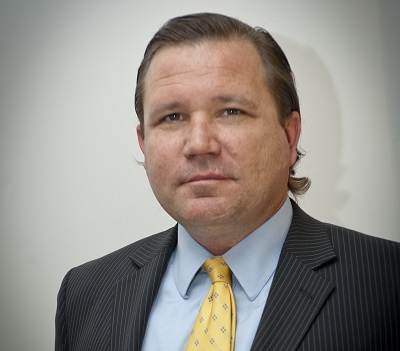
Nordrehaug attained a measure of fame among fellow plaintiffs' lawyers by persuading a federal appellate panel last year to defer to the landmark 2014 Iskanian v. CLS Transportation LLC decision by the state Supreme Court. The 9th U.S. Circuit Court of Appeals ruling held that employees cannot waive their right to bring representative claims under California's Private Attorney General Act. In effect, it is a loophole in the seemingly unstoppable trend toward arbitration enforced by the U.S. Supreme Court.
"I get an occasional thank you from my colleagues," Nordrehaug said. The circuit panel reversed a district judge's order compelling arbitration and dismissing the plaintiffs' class action complaint raising representative employment-related claims for civil penalties under California's PAGA statutes. Sakkab v. Luxottica Retail North America Inc., 13-55184 (9th Cir., Sept. 28, 2015)
"The case is over," Nordrehaug said. "The defense did not petition for cert, and we settled for a confidential amount. We were interested in keeping this opportunity to protect employee rights." To bargain for the settlement, instead of returning to district court to start the case anew, Nordrehaug said he was prepared to discount his fees. "The case had dragged on, and my clients were happy to have it over. I wasn't looking for a huge fee. So my colleagues owe me additional thanks."
High court politics may have played a role in his opponents' decision to settle, Nordrehaug said. "It could have been the absence of Scalia," he speculated, referring to the death during the Sakkab settlement talks of Justice Antonin Scalia, author in 2011 of the court's leading pro-arbitration opinion, AT&T Mobility LLC v. Concepcion. "That probably altered their calculus. That would be my bet."
In Sakkab's wake, Nordrehaug said, things have changed on the arbitration landscape. "We no longer see so much forum shopping," in which defendants try to get their cases into federal court, so they can potentially move them on to arbitration by having judges bound by Concepcion enforce representative action waivers.
He said he's also having success lately with the state courts of appeal. "In the trial court, the defense move to enforce arbitration clauses with PAGA waivers, the court throws the waiver out, the defendant appeals and the courts of appeal are now holding that the entire agreement is unenforceable."
Nordrehaug said he makes no great claims for his talents. "I probably lose as many as I win, but somebody had to bring Iskanian to federal court. It was certainly a very tense case. Judge [Milan] Smith [author of the majority Sakkab opinion] really did an excellent job, and that's probably why the case didn't go en banc."
— John Roemer
For reprint rights or to order a copy of your photo:
Email
Jeremy_Ellis@dailyjournal.com
for prices.
Direct dial: 213-229-5424
Send a letter to the editor:
Email: letters@dailyjournal.com