


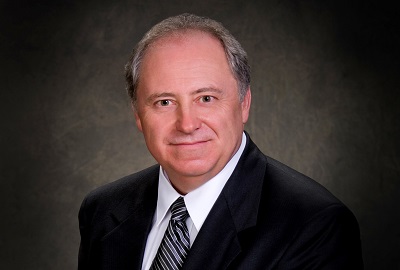
When workers at a national drugstore chain complained about security checks and demanded compensation for what they alleged was a time-consuming and cumbersome process, Los Angeles County Superior Court Judge Richard E. Rico certified a class of as many as 70,000 current and former employees.
"If workers come to work with a purse or a backpack, they have to open it on the way out at the end of their shift for a security check," Hart said. "If a worker buys an item at work, he or she gets a label to put on it so there's no dispute about ownership. The system is set up to avoid pharmaceutical thefts and to control the shrink," as shoplifting losses are known. Battling against certification, Hart retained experts to go to stores to observe the security arrangements in action. They then reported what they found to the court.
"We made a decertification motion, based on what we found in post-certification discovery: many workers never underwent searches or the time involved was de minimis," Hart said. "The worker-to-worker variations were significant, and there was no way to assess liability without individualized analyses. Under California Supreme Court precedent, it was simply not statistically possible for the plaintiffs to sustain their case." Rico granted the decertification motion in August 2015. Murphy v. Doe Corp., BC464785 (L.A. Super. Ct., filed July 5, 2011)
For the same client, Hart and colleagues in January obtained a 9th U.S. Circuit Court of Appeals affirmance of a 2014 federal court ruling denying class status to a group of pharmacists who claimed the company forced them to work unpaid overtime to fill customer prescriptions. The circuit panel agreed with the Sidley team that there was insufficient evidence to back the plaintiffs' claim.
In a third case representing the drugstore chain, Hart successfully fought off a class certification motion for plaintiff employees who challenged the company's automobile expense reimbursement formula. Hart argued that such claims required individual inquiries into the actual expenses incurred by each employee, making the matter unsuitable for class treatment.
"I do a lot of this kind of thing for a lot of clients spanning a lot of industries, including retail, insurance and financial services," Hart said. "Also, I do traditional labor law work before the National Labor Relations Board." He said that part of his practice has grown. "That is due to changes in labor law regulations by the Obama administration," he said.
— John Roemer
For reprint rights or to order a copy of your photo:
Email
Jeremy_Ellis@dailyjournal.com
for prices.
Direct dial: 213-229-5424
Send a letter to the editor:
Email: letters@dailyjournal.com