


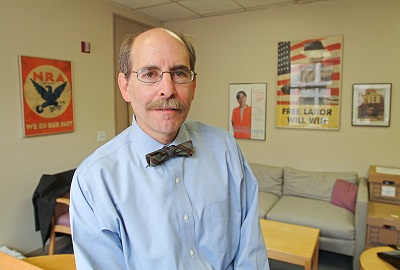
Rubin, a class action attorney who has clashed with such heavy hitters as Wal-Mart Stores Inc. and McDonald's Corp., didn't begin his career as a lawyer. He was working as a sales rep for a charter travel business in Boston when he felt the urge to work on behalf of the public interest, and if he decided to do that, he would need to study law. So he convinced his company to open a sales office in Washington, D.C., where he could work while studying at Georgetown University.
Rubin became drawn to employment law while clerking for U.S. Supreme Court Justice William J. Brennan Jr. in 1980. At that time, the Supreme Court was fielding numerous employment cases with the labor side represented by Marsha Berzon, a former Brennan clerk who now is a judge on the 9th Circuit Court of Appeals. Rubin was impressed by Berzon's work and eventually left to join the Altshuler Berzon law firm, which Berzon and her husband Stephen P. Berzon had recently formed in San Francisco with Fred H. Altshuler, a former directing attorney for California Rural Legal Assistance.
"When I got to the firm in the early 1980s, a lot of the labor law practice was focused on the rights of undocumented workers," Rubin said. "But issues like that tend to come in clusters, which can last for five or ten years before another cluster comes along."
One recent "cluster" that Rubin has focused on recently is the question of how liable a company is for the actions of its contractors or franchisees. Rubin was co-lead counsel on a case that was settled last year, accusing Wal-Mart and Schneider Logistics — one of its major contractors — of underpaying more than 2,000 workers in its four import warehouses in the Inland Empire. Evidence showed that workers were being paid less than minimum wage, were not getting overtime pay and were not being paid for all the hours they worked.
Technically, neither Wal-Mart nor Schneider employed the workers. They were employees of two staffing agencies retained by Schneider, which managed the warehouses for Wal-Mart. But Rubin argued that Wal-Mart and Schneider were liable because they controlled the labor policies and practices. After U.S. District Court Judge Christina A. Snyder of Los Angeles ruled the case had enough merit to be tried in front of a jury, Schneider agreed to a settlement valued at $22.7 million when it was finalized last September. Rubin is currently suing McDonald's on similar grounds, arguing that it can be held responsible for the wages paid by its franchisees.
In other recent cases, the California Supreme Court in May issued a non-binding opinion that employers should provide chairs to workers who can perform their jobs while sitting, as part of a federal case that Rubin is arguing on behalf of workers at CVS Health Corp. pharmacies. In April, the state 2nd District Court of Appeal sided with arguments that Rubin made before it when it overturned a ruling by Los Angeles Superior Court Judge Rolf M. Treu that held that California's teacher tenure laws were unconstitutional.
Rubin is currently involved in efforts to increase the minimum wage in St. Louis, Kansas City, Missouri and other locales. And he's involved in several cases that he says will be part of the next major "cluster" in the employment law field, challenging the effect of mandatory arbitration agreements on class action lawsuits, which he sees as a violation of "workers to join together to improve their working conditions."
— Dean Calbreath
For reprint rights or to order a copy of your photo:
Email
Jeremy_Ellis@dailyjournal.com
for prices.
Direct dial: 213-229-5424
Send a letter to the editor:
Email: letters@dailyjournal.com