


Insurance
Sep. 20, 2017
Ricardo Echeverria
See more on Ricardo EcheverriaShernoff Bidart Echeverria LLP


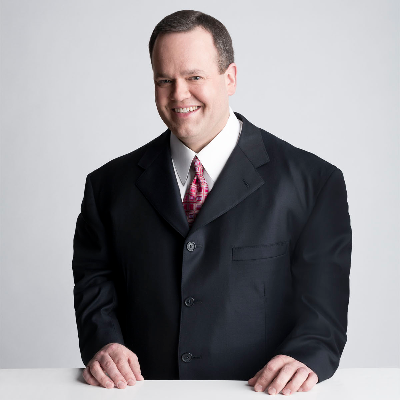
Echeverria’s specialty is representing the underdog — vulnerable people who have suffered significant losses, either material or physical. In his work on catastrophic injury and insurance bad faith cases, the misfortunes of Echeverria’s clients may evoke compassion, but that doesn’t mean he can ever take a jury’s sympathy for granted.
You still need to prove your case, Echeverria said, and jurors will hold you to that, so he goes all in, every time. “I am very passionate about what I do — I don’t take it lightly. When I decide to take a case, I treat it more like a profession and a passion than a case,” he said. “Sometimes cases settle, but sometimes they don’t, so you have to be prepared to take it all the way.”
One of Echeverria’s recent catastrophic injury cases involved a security guard who lost his leg to a forklift accident, but not until after he underwent 15 painful surgeries in attempt to save it. Meier v. Pennysaver USA, RIC1507069 (Riverside Super. Ct., June 12, 2015).
The man made $9 per hour, and the defense tried to make the case all about income levels, and tie the suit to his economic losses, Echeverria said. But his team emphasized that pain is pain, no matter how much money you make. Though the economic damages were relatively small — the jury awarded $2 million in economic damages — they also awarded $15 million for pain and suffering.
In a challenging insurance bad faith case, Echeverria represented a couple who lost everything in a San Diego County wildfire — including their insurance documents. Van Zee v. Homesite Insurance, 37-2009-00051916-CU-BC-NC (San Diego Super. Ct., filed March 4, 2009).
Rather than paying, Echeverria said, their insurance company “was nickel-and-diming them” for a year and a half, and withholding the portion of their policy that gave them guaranteed replacement cost coverage. Echeverria’s team was able to obtain the policy documents through the discovery process, and ultimately, a jury found the company’s conduct to be outright fraud. They awarded $100,000 in compensatory damages, but $3.2 million in punitive damages — which was 10 percent of the company’s surplus. “It was a great example of how punitive damages could come into play and change the way an insurance company does business,” Echeverria said. “You turn to your insurance company in a time of need, and when they don’t respond, it makes it worse.”
The common denominator in his cases is everyone is a victim in need of help, Echeverria said. “It feels good to be representing them.”
— L.J. Williamson
For reprint rights or to order a copy of your photo:
Email
Jeremy_Ellis@dailyjournal.com
for prices.
Direct dial: 213-229-5424
Send a letter to the editor:
Email: letters@dailyjournal.com