


Labor/Employment,
U.S. Supreme Court
Oct. 3, 2017
US high court debates key employment arbitration cases
A full U.S. Supreme Court returned to the bench Monday to open its 2017 term with a case that will determine how millions of workers across the nation may proceed with grievances against their employers.


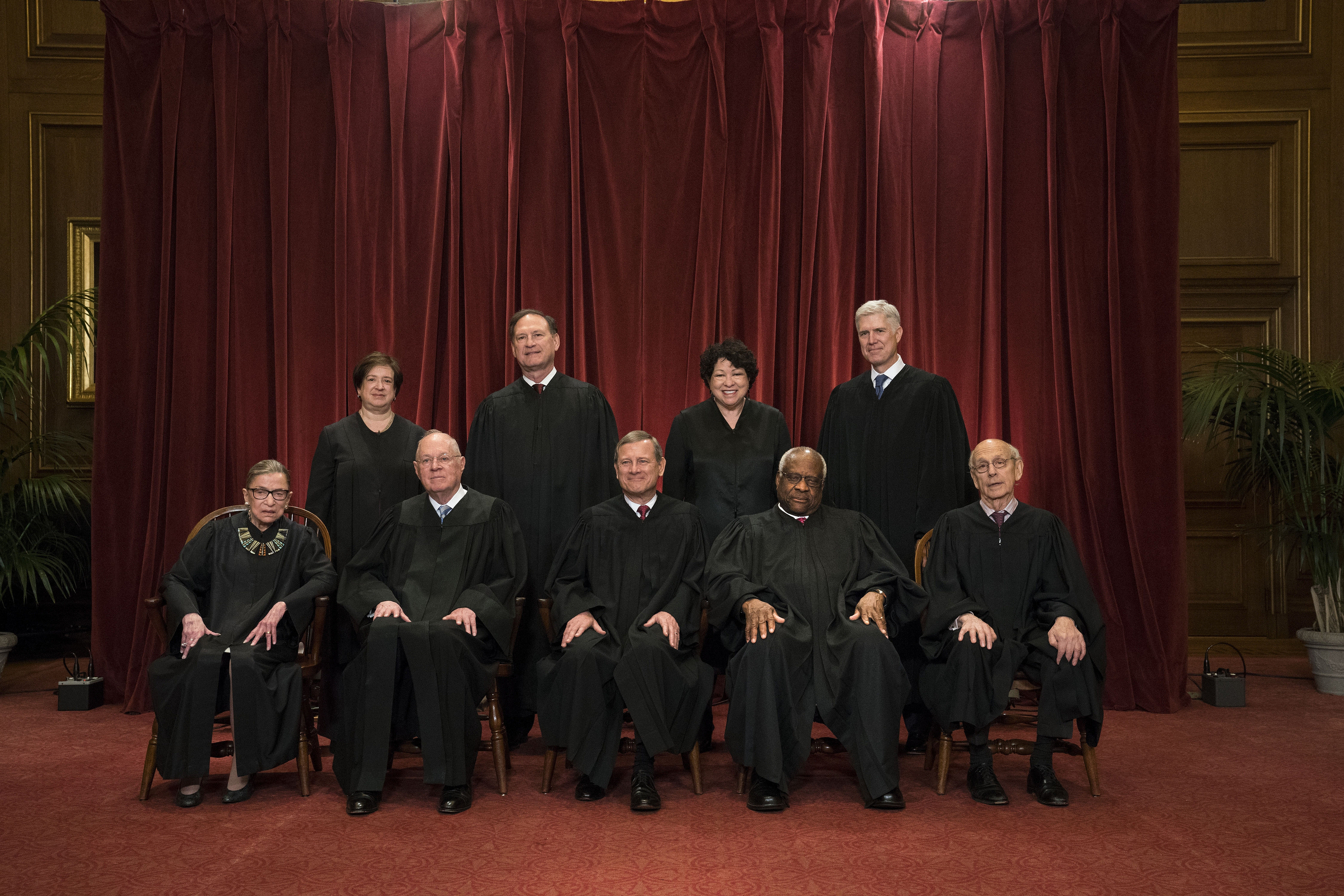
A full U.S. Supreme Court returned to the bench Monday to open its 2017 term with a case that will determine how millions of workers across the nation may proceed with grievances against their employers.
The case, Epic Systems Corp. v. Lewis, is the latest in a string in which the nation’s high court has addressed the hot button issue of arbitration. The current battle pits the Federal Arbitration Act’s protection of arbitration agreements as legally valid against the National Labor Relations Act’s language protecting employees’ rights to engage in “concerted activity.”
In recent years, the Supreme Court has repeatedly upheld arbitration agreements under the arbitration act, often with conservative judges in the majority. Justice Anthony Kennedy, who many attorneys view as the swing vote, was a member of those majorities.
On Monday, he seemed skeptical of claims that “concerted activity” protections barred employers from requiring their workers to participate in individual arbitration proceedings. He suggested employees with similar claims could effectively participate in joint proceedings by filing separate arbitration agreements with the same attorney.
Justice Neil Gorsuch asked no questions.
The liberal wing of the court peppered the employers’ attorneys with questions, indicating skepticism. Justice Stephen Breyer went so far as to say that a ruling favorable to the employers could overturn “labor law that goes back to, for FDR at least, the entire heart of the New Deal.”
Regardless of how the court rules, California attorneys noted the decision will have a major impact in labor litigation.
“If the court rules in favor of the employers, then an increasing number of employers will require arbitration of workplace disputes and prohibit joint class action in those proceedings,” said Michael Rubin, who filed an amicus brief in the case on behalf of several labor organizations.
“There will be far fewer workplace complaints filed and the enforcement of workplace rights and wage protections will begin to wither away,” he added.
Rubin, who was present at Monday’s arguments, said that a pro-employer decision will put a greater burden on state agencies to pursue wage violations, predicting a continued increase in Private Attorney General Act filings in California.
During arguments, Paul Clement, a former U.S. solicitor general, who argued on behalf of the employers, noted aggrieved employees could engage in “concerted activity” by complaining to the Wage and Hour Division of the Department of Labor, which could sue the companies.
Monday’s arguments consolidated three cert petitions, one of which came from the 9th U.S. Circuit Court of appeals. Ernst & Young LLP v. Morris, 16-300.
In Morris, a split 9th Circuit panel ruled that employment contracts with the accounting giant Ernst & Young requiring employees to bring separate proceedings in any employment disputes were unenforceable because they violated the National Labor Relations Act.
As of now, the decision is binding precedent in the circuit, and district courts have applied it, giving rise to a number of pending appeals.
Most recently, the 9th Circuit stayed an appeal in a labor lawsuit against the ride-sharing giant Uber.
Felix Shafir, who filed an amicus brief in support of the employers in Epic Systems, noted that the pending Supreme Court decision will likely spur activity in these appeals, which have been awaiting a Supreme Court ruling.
“Those appeals are sitting there waiting to see what happens in the Epic trilogy. Once the Supreme Court decides Morris, that pressure will be released,” said Shafir.
Rex S. Heinke, who represented Ernst & Young, said that the court’s main task is to reconcile competing federal statues, which he said it has done repeatedly.
“The Supreme Court has made it pretty clear that if one statute creates some sort of right ... the FAA will control unless Congress has made it clear that the Federal Arbitration Act does not apply,” he said.
The 9th Circuit and the California Supreme Court resisted in a decade of pro-arbitration decisions handed down by the U.S. Supreme Court. Shafir said that if the U.S. high court rules in favor of the employers, he doesn’t anticipate all lower courts backing down.
“There’s enough history of intransigence on the 9th Circuit’s and the California Supreme Court’s side that the courts will still be divided,” he said. “At the end of the day, there’s just been such a resistance to U.S. Supreme Court decisions. It’s hard to imagine that resistance fading away.”
Nicolas Sonnenburg
nicolas_sonnenburg@dailyjournal.com
For reprint rights or to order a copy of your photo:
Email
Jeremy_Ellis@dailyjournal.com
for prices.
Direct dial: 213-229-5424
Send a letter to the editor:
Email: letters@dailyjournal.com