


Jan. 18, 2018
9th Circuit says location board meetings are key to determining corporate citizenship for holding companies
The 9th U.S. Circuit Court of Appeals has provided new guidance on a U.S. Supreme Court decision outlining how to determine whether diversity jurisdiction applies in cases involving a business engaging in activity in multiple states.


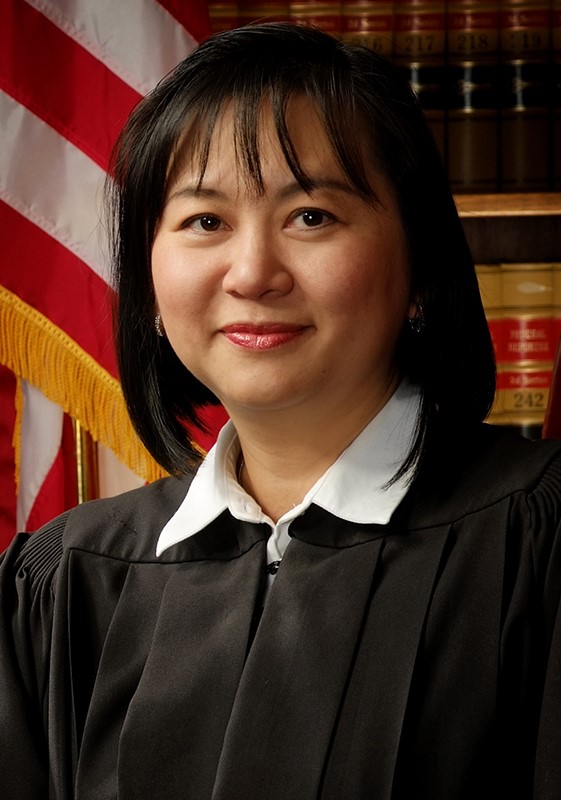
The 9th U.S. Circuit Court of Appeals has provided new guidance on a U.S. Supreme Court decision outlining how to determine whether diversity jurisdiction applies in cases involving a business engaging in activity in multiple states.
In a split opinion published Wednesday, Circuit Judge Jacqueline Nguyen wrote that the “nerve center” test established by the nation’s high court in Hertz Corp. v. Friend, 559 U.S. 77, 80 (2010), required courts presiding over cases with holding companies as parties to look to board meetings as an indicator of corporate citizenship.
“We conclude that a recently-formed holding company’s principal place of business is the place where it has its board meetings, regardless of whether such meetings have already occurred, unless evidence shows that the corporation is directed from elsewhere,” Nguyen wrote. She was joined in full by U.S. District Judge Steven Paul Logan, visiting from Arizona. 3123 SMB v. Horn, 2018 DJDAR 587 (9th Cir. Jan. 17, 2018).
The case before the 9th Circuit involves a Missouri holding company called Lincoln One Corporation and its wholly owned subsidiary, 3123 SMB LLC, which has real estate holdings in Santa Monica. Both companies are owned and operated by Anthony Kling and his mother, Mary Kling, who live in California but have ties to Missouri and visit with some regularity, according to the court’s opinion.
In 2014, 3123 SMB sued Steven Horn, a California attorney who had represented the company in state court litigation over the Santa Monica apartment complex it owned. The action, which was for alleged legal malpractice, was filed only a few weeks after Lincoln One was incorporated and took control of 3123 SMB.
U.S. District Court Judge Dale S. Fischer dismissed the case later that year, ruling that the court lacked jurisdiction because 3123 SMB was a corporate citizen of California, despite Anthony Kling’s assertion that Lincoln One held board meetings in Missouri. Before the case was filed, Lincoln One had not yet held any board meetings.
In reviewing Fischer’s jurisdiction ruling, Nguyen looked to guidance from the 3rd U.S. Circuit Court of Appeals, which she said was the only circuit to have considered diversity jurisdiction in a case involving a holding company since the Supreme Court decided Hertz.
In 2013, that court ruled that a holding company’s board meetings in Wilmington, Delaware made it a citizen of the state, because the company was small and its quarterly meetings in the state constituted meaningful business activity. Johnson v. SmithKline Beecham Corp., 724 F.3d 337 (3d Cir. 2013).
Nguyen found the situation in the 3rd Circuit case similar.
But Circuit Judge Andrew D. Hurwitz was not persuaded by Nguyen’s reasoning.
Dissenting, he wrote that because Lincoln One’s shareholders and directors, the Klings, lived in California and that its only corporate asset was also in the state, it was a California company.
“Today’s decision gives rise to the very dangers of jurisdictional manipulation that Hertz eschews,” Hurwitz wrote. “Under the majority’s approach, a newly formed corporation is entitled, in the absence of other activity, to a presumption that its state of incorporation is also its principal place of business.”
Hurwitz said that Lincoln One would be able to conduct business in California exclusively while benefiting from the protection of the limited jurisdiction of federal court.
Though the ruling reverses Fischer’s 2014 dismissal, it does so conditionally.
Nguyen wrote that the court found that evidence suggested that the Klings manipulated the “ownership structure” of the Santa Monica property involved in the suit so as to manufacture diversity and that Lincoln One and 3123 SMB could in fact be “alter egos.”
The 9th Circuit directed Fischer to consider on remand whether in fact this was the case.
John T. Lupton, a partner at Lindahl Beck LLP who represented Horn on appeal, declined to comment on the case and said that Horn was now being represented by Wendy Wilcox, a partner at Skane Wilcox LLP. She could not be reached for comment by press time.
David C. Knieriem, an attorney in Clayton, Missouri who represented 3123 SMB, could not be reached for comment either.
Nicolas Sonnenburg
nicolas_sonnenburg@dailyjournal.com
For reprint rights or to order a copy of your photo:
Email
Jeremy_Ellis@dailyjournal.com
for prices.
Direct dial: 213-229-5424
Send a letter to the editor:
Email: letters@dailyjournal.com