


9th U.S. Circuit Court of Appeals,
Labor/Employment
Feb. 6, 2018
California labor law can apply to coastal rigs on Outer Continental Shelf
Oceanic drilling rig workers received a significant victory from the 9th U.S. Circuit Court of Appeals when a three-judge panel ruled that California labor laws can apply to stationary drilling platforms more than 3 miles off the state’s coast on the Outer Continental Shelf.


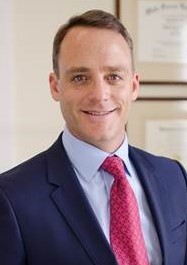
Oceanic drilling rig workers received a significant victory from the 9th U.S. Circuit Court of Appeals on Monday, when a three-judge panel ruled that California labor laws can apply to stationary platforms more than three miles off the state's coast on the Outer Continental Shelf.
In a detailed, 40-page opinion, Judge Morgan Christen said that California's wage and overtime regulations were not inconsistent with federal labor standards and could be applied to the workers under the Outer Continental Shelf Lands Act. Newton v. Parker Drilling Mgmt. Servs., 2018 DJDAR 1234 (9th Cir. Feb. 5, 2018).
The court's decision vacates a prior ruling by U.S. District Judge R. Gary Klausner.
In 2015, the Central District judge dismissed a putative class action filed by Brian Newton, who had worked on a rig off the Santa Barbara coast operated by Parker Drilling Management Services Ltd. for several years.
Newton's class action attempt alleged that the company required him and other "roustabouts," as rig workers are known, to spend 14-day shifts, only receiving wages for 12 hours of work per day. During the other 12 hours of the day, the workers were required to stay on the rig and be on standby duty, according to Newton's case.
They were occasionally required to respond to emergency calls and training exercises, but did not receive payment for this time, Newton argued.
The putative class alleged several violations of California's labor laws, including for minimum wage, overtime, pay stub, timely final wages and meal periods.
Klausner granted summary judgment, reasoning that state labor laws were applicable under the Outer Continental Shelf Lands Act only when they fill a "significant void or gap" under federal labor law. He ruled that the Fair Labor Standards Act had no such gaps.
But the 9th Circuit's opinion rejected that reasoning.
Turning to a string of U.S. Supreme Court cases that addressed the legislative history of the Outer Continental Shelf Lands Act, the court noted that the act allows for the laws of states adjacent to devices like oil rigs, which are connected to the sea floor, to apply to disputes over rig activity, so long as the state laws do not conflict with federal regulations.
Christen called the question of whether state laws could apply to the claims in the lawsuit a novel one. The court created a three-step test, questioning whether the controversy at hand occurred on the Continental Shelf, whether federal law was applicable and whether potentially applicable state law is inconsistent with federal law.
She wrote that California's minimum wage protections were not inconsistent with federal law simply because federal minimum wage rates are lower.
Referring to a California Supreme Court decision that held that sleep time required on a job could not be excluded from compensable hours, Christen wrote, "Mendiola only establishes that California embraces a more protective standard for determining hours worked, not that California's standard is inconsistent with federal law."
The panel remanded the case to Klausner to consider whether California meal period, final pay and pay stub laws were inconsistent with federal law under the new test.
Michael Strauss, a Ventura attorney who represented the putative class on appeal, said that the ruling could affect up to 2,000 workers on more than 20 rigs along the California coast.
"This is a big decision," he said in a phone interview Monday. "This won't just affect workers at Parker, but all the workers working on those platforms."
Strauss and his firm have filed five similar suits throughout California, all of which have been unsuccessful thus far, he said. The 9th Circuit's ruling will now control those cases, which he said are currently on appeal.
"Hopefully these workers will get paid properly," he commented.
Ronald J. Holland, a partner in DLA Piper's San Francisco office who represented Parker, could not be reached for comment Monday
Circuit Judges Richard A. Paez and Marsha S. Berzon sat on the panel and concurred with Christen.
Nicolas Sonnenburg
nicolas_sonnenburg@dailyjournal.com
For reprint rights or to order a copy of your photo:
Email
Jeremy_Ellis@dailyjournal.com
for prices.
Direct dial: 213-229-5424
Send a letter to the editor:
Email: letters@dailyjournal.com