


California Courts of Appeal,
Family
Mar. 29, 2018
The death of declarations
Absent a codified exception, party declarations in family law matters are now disallowed if there is no opportunity for cross-examination.


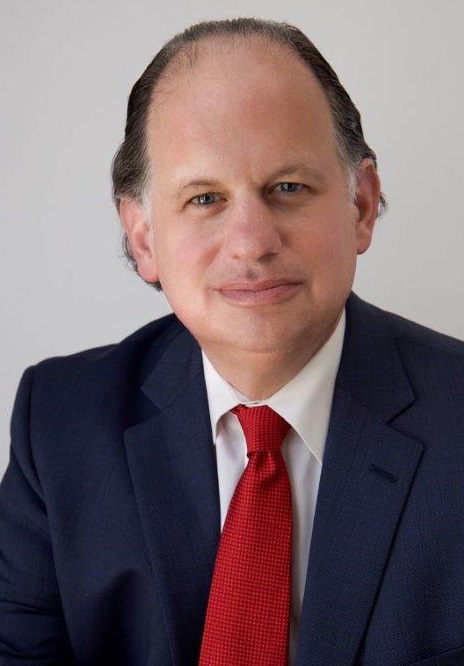
Andrew D. Cook
Andy is a family law attorney in San Diego. He is a certified family law specialist by the State Bar Board of Legal Specialization.
Family Code Section 217 provides, "absent a stipulation of the parties or a finding of good cause pursuant to subdivision (b), the court shall receive any live, competent testimony that is relevant and within the scope of the hearing."
Now, the Division 2 of the 2nd District Court of Appeal in Los Angeles has held that Section 217 not only requires the admissibility of relevant live evidence, but it precludes the admissibility of written, though sworn, testimony, at least if the party declarant who wrote the declaration is not present to be cross-examined.
In Marriage of Swain, 2018 DJDAR 2799 (March 26, 2018), the Court of Appeal reversed the trial court for considering an income and expense declaration filed by an ex-wife in a post-judgment request to modify spousal support filed by the former husband, Leon, because the wife was not present at the hearing and the former husband wanted to cross-examine her.
Leon had been paying a stipulated $2,600 per month, did not serve a notice to appear, which is the equivalent to a subpoena, except that the former compels a party to appear and the latter compels a third party to appear. In other words, the former wife was not required to appear; she broke no law by blowing off the hearing.
So this case was an anomaly. On the one hand, unlike most non-appearing parties, the former wife did file something -- although it was just a timely filed income and expense declaration, not accompanied by any regular responsive declaration. In addition, the former wife never served Leon with the income and expense declaration. This created an entirely separate issue on which to base an appeal -- in other words, Leon had been denied his due process by not seeing the income and expense declaration before the hearing. Indeed, the declaration should have been served nine court days before the hearing as mandated pursuant to Code of Civil Procedure Section 1005. Instead, Leon did not see the income and expense declaration until the date of the hearing.
In addition, in making its decision, the trial court actually relied on information in the income and expense declaration over the objection of Leon. And instead of granting Leon's request to terminate spousal support, the trial court merely reduced the obligation to $750. The Court of Appeal, however, ordered that his support obligation be terminated all together.
In ruling on the appeal, the justices took a look at the landmark case of Elkins v. Superior Court, 41 Cal. 4th 1337, 1358 (2007). That case struck down a local rule that forced litigants at trial to use declarations rather than testimonial evidence in presenting their cases in chief. The Elkins decision also led to Family Code Section 2017, which takes away the distinction between trials on the one hand (where rules of hearsay apply) and Code of Civil Procedure Section 2009, which has traditionally allowed for declarations (indeed, in some courtrooms required them) in non-trial settings such as pre-trial motions. As such, Section 217 has gone further than where Elkins itself went, because at least Elkins still allowed for declarations in non-trial settings.
The justices in Swain expanded Family Code Section 217 to at least, in some cases, mandate not just live testimony if offered but also prohibit declaration testimony. But the justices did not go even further. They refused to decide if Code of Civil Procedure Section 2009 no longer applies at all to non-trial matters in family law, which would mean that declarations could never come into evidence or be considered.
Stated differently, we already know that for declarations to come into evidence, there has to be a request that the declaration be admitted. In re Marriage of Shimkus, 244 Cal. App. 4th 1262 (2016). But the court in Swain did not go further by saying that Section 2009 no longer applies (and that the Reifler v. Superior Court, 39 Cal. App. 3d 479 (1974), decision, which allowed -- indeed, encouraged -- the use of declarations in post-judgment matters based on Section 2009 was effectively disapproved). Instead, the court, in an opinion written by Justice Elwood Lui (who was joined by Justices Judith Ashmann-Gerst and Victoria Chavez), said, "we also need not answer the general question whether Section 217 makes written declarations submitted in connection with family law motions subject to the hearsay rule in every case."
But you can see the writing on the wall. First came the legislation that says that live testimony must be allowed even if the matter is not technically a trial. Then came Shimkus, which said that not only must live testimony be allowed, it is required, although declarations can also be considered if they are introduced into evidence.
Now, at least under the facts of Swain, it is not enough whether live testimony is allowed or mandated. Party declarations in family law matters, absent one of the codified exceptions to Section 217, are disallowed, if there is no opportunity for cross-examination. So save your money on notices to appear. The other side's declaration isn't coming into evidence anyway, unless he or she (as opposed to the attorney of record) shows up.
Declarations have served a valuable purpose in family law matters. If well written, they represent a party's contention in a clear fashion, omitting what the judge does not need to know and including what he or she must know. It is a quicker way of presenting facts, and it is cheaper than preparing a witness to testify. Indeed, a judge can come up with a tentative decision a lot easier if declarations are reviewed before a hearing than if live testimony is needed to ascertain the facts.
But people have a right to be heard. And demeanor is important. And some of these matters are so important and have the same impact as judgments in that they create appealable money orders (OK, judgments), that there is no substitute for live testimony.
Of course, the one way to keep declarations alive is for the parties to stipulate to their admissibility. But this, too, is fraught with danger, because parts of declarations are clearly irrelevant or inadmissible for reasons other than hearsay. A party may challenge parts of a declaration with a motion to strike, which must be filed two court days before the hearing, but if that occurs, how do the parties stipulate that the declarations come into evidence, warts and all? Again, it looks like live testimony is the wave of the future.
Submit your own column for publication to Diana Bosetti
For reprint rights or to order a copy of your photo:
Email
Jeremy_Ellis@dailyjournal.com
for prices.
Direct dial: 213-229-5424
Send a letter to the editor:
Email: letters@dailyjournal.com