


Constitutional Law,
Immigration,
U.S. Supreme Court
Apr. 18, 2018
Gorsuch joins Supreme Court liberals to strike immigration law
The U.S. Supreme Court on Tuesday struck down part of an immigration statute governing deportable offenses as unconstitutionally void for vagueness, paving the way for some criminal immigrants to seek relief from deportation.


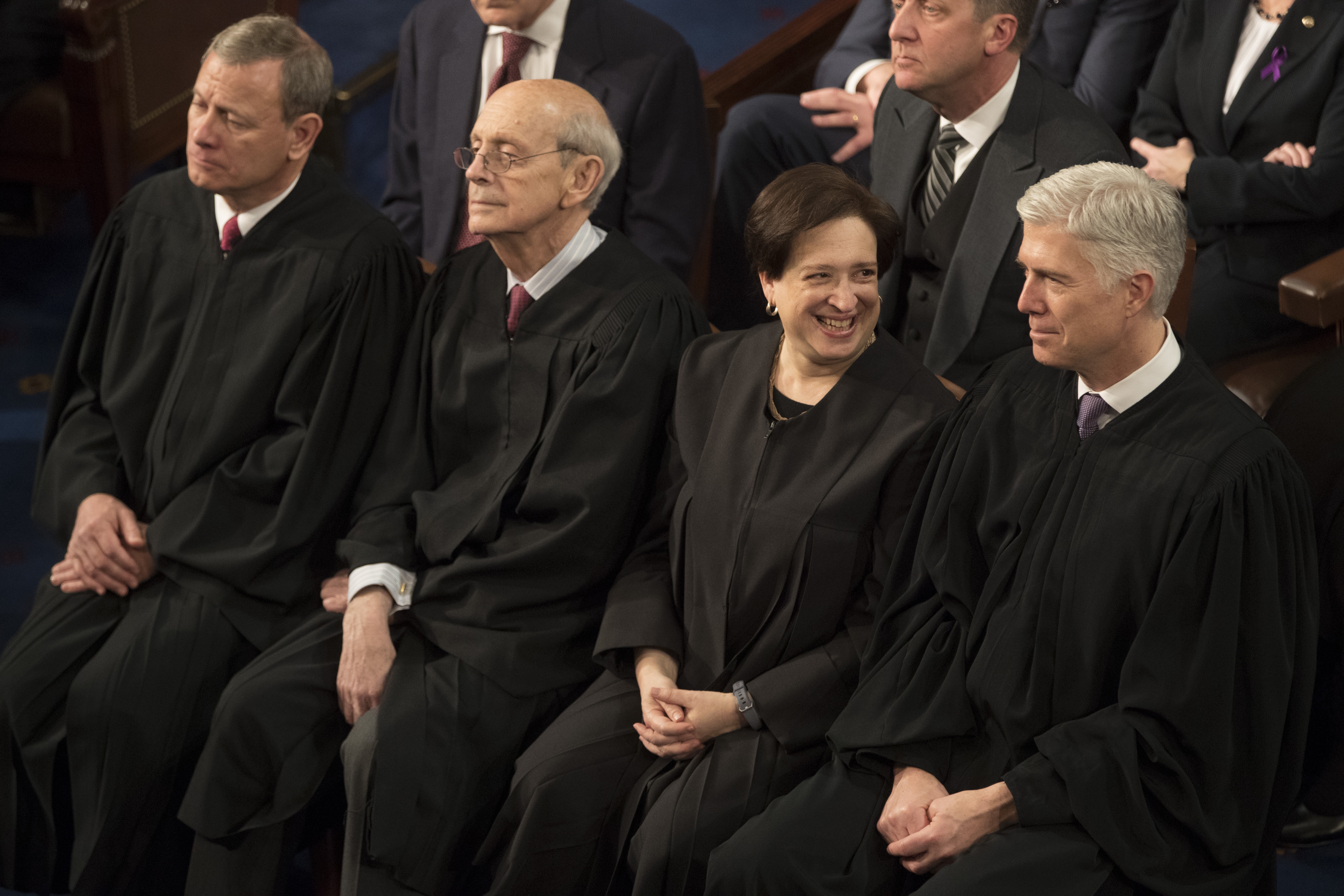
The U.S. Supreme Court on Tuesday struck down part of an immigration statute governing deportable offenses as unconstitutionally void for vagueness, paving the way for some criminal immigrants to seek relief from deportation.
In a 5-4 vote, the court upheld a 9th U.S. Circuit Court of Appeals decision that a legal permanent resident who committed multiple nonviolent burglaries could seek relief from his deportation order since the statute dictating that immigrants who have committed certain crimes of violence was unclear.
The majority found that what constituted a crime of violence was unclear and therefore did not give proper notice to immigrants about what might get them deported, violating the due process clause of the Fifth Amendment of the U.S. Constitution. Sessions v. Dimaya, 15-1498.
Justice Elena Kagan wrote the majority opinion while Justice Neil Gorsuch wrote a concurring opinion that delved deeper into the constitutional history of the void for vagueness doctrine.
Chief Justice John Roberts filed a dissenting opinion signed by Justices Anthony Kennedy and Samuel Alito. Justice Clarence Thomas wrote a separate dissent.
"[T]his Court has reiterated that deportation is 'a particularly severe penalty,' which may be of greater concern to a convicted alien than 'any potential jail sentence.'" Kagan wrote for the majority.
Kagan wrote that in Johnson v. United States, the court held that part of another law's definition of a "violent felony" was impermissibly vague and found that the portion of the Immigration and Nationality Act under review "suffers from the same constitutional defect." Johnson v. United States, 559 U. S. 133, 140.
Gorsuch explored the history of the fair notice requirement in the Constitution to explain why a person being aware of the consequences of infractions is an essential bulwark against governmental overreach.
"Justice Gorsuch really provides an in depth analysis of the constitutional roots of the fair notice requirement and argues that it applies broadly in the civil context, not just to deportation," said Andrew Pincus, a partner at Mayer Brown LLP in Washington, D.C., who filed a friend-of-the-court brief on behalf of the respondent James Dimaya.
"In some ways it's an invitation potentially for there to be new challenges to all sorts of civil prohibitions on conduct that the court would maybe have rejected in the past," said Andrew Spore, an associate at Rosen Bien Galvan & Grunfeld LLP in San Francisco.
Gorsuch made clear the decision of the court was limited.
"[Gorsuch] wanted to make it clear that what he is talking about is a procedural protection, not a substantive one," said Jeffrey Bornstein, a partner at Rosen Bien Galvan & Grunfeld LLP in San Francisco.
Gorsuch's concurrence forcefully rebutted Thomas' dissent which questioned whether the void for vagueness doctrine is consistent with the original understanding of due process.
The dissent by Roberts argued the case was different than what the court previously decided in Johnson, stating that a residential burglary has a substantial risk of ending in violence and was properly classified as a crime of violence, said Kevin Johnson, dean of the UC Davis School of Law.
"This crime of violence removal ground has now been struck down but there are plenty of other ways of removing somebody who has been convicted of a crime," Johnson said of the potential impact of the case. "There's plenty of removal grounds that the government can rely on and this for now is just limiting one of them."
"The Justice Department believes that certain crimes committed by an illegal alien, visa holder, or an alien otherwise granted lawful status in the United States, should trigger their removal," Justice Department spokesman Devin O'Malley said in a statement. He said Congress should close such "criminal alien loopholes" so lawbreakers do not avoid the consequences of their actions.
Chase DiFeliciantonio
chase_difeliciantonio@dailyjournal.com
For reprint rights or to order a copy of your photo:
Email
Jeremy_Ellis@dailyjournal.com
for prices.
Direct dial: 213-229-5424
Send a letter to the editor:
Email: letters@dailyjournal.com