


California Supreme Court,
Civil Rights,
Labor/Employment
Apr. 30, 2018
State high court to hear case over unpaid off-the-clock minutes
The state Supreme Court is primed for arguments Tuesday morning in a case where a Starbucks manager is suing, claiming a class of workers should be paid for the minutes between clocking out and locking up the shops.


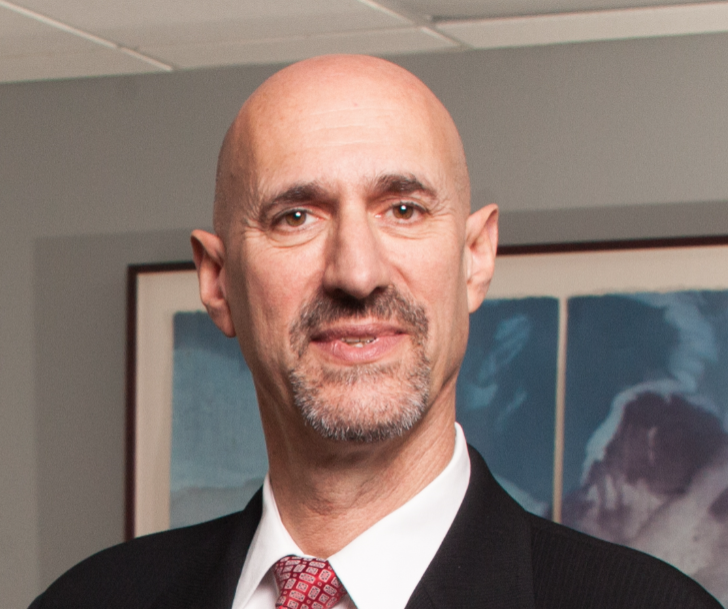
The state Supreme Court is primed for arguments Tuesday morning in a case in which a Starbucks manager is suing, claiming a class of workers should be paid for the minutes between clocking out and locking up the shops.
According to court documents, manager Douglas Troester regularly spent four to 10 minutes at the end of shifts over a period of 17 months closing down the coffee shop after he clocked out. This totals roughly a day and a half of unpaid wages, according to his brief, prepared by Shaun Setareh and H. Scott Leviant of Setareh Law Group.
He argues that California's Labor Code plainly states that employers must pay for all off-the-clock work.
The defense has argued that the closing-up minutes fall under the federal de minimis defense laid down in Anderson v. Mt. Clements Pottery Co., 328 U.S. 680 (1946), which said it is impractical to expect employers to track small increments of time off the clock. In Anderson, a class of pottery workers sued for unpaid wages from activities like switching on machines before their shifts began.
Starbucks has also argued that Troester is exaggerating the time actually spent on the tasks, and that the de minimis doctrine is a common-sense defense against nitpicky wage claims.
According to court documents, Starbucks changed its policy in 2010, and no longer requires employees to complete a closing procedure after clocking out. Troester et al., v. Starbucks Corporation et al., S234969.
"I think that we have excellent arguments on our side, and when you look at the statutes, when you look at the Supreme Court decisions that have come down in the past five, 10, 15 years, and you combine all of that, there should only be one conclusion, and that's that the federal law shouldn't apply when you have California wage claims," said Setareh, lead attorney for Troester.
"We're happy to get this issue presented to the Supreme Court, and looking forward to the court finding that all time worked by the employees has to be protected and paid," said Stanley D. Saltzman of Marlin & Saltzman LLP, who will argue for Troester. "It's very clear to us that the public policy in this state does not allow for the importing of the de minimis defense into California wage law,"
Rex S. Heinke of Akin Gump Strauss Hauer & Feld LLP leads the Starbucks defense team, and will argue on behalf of the company. He declined to comment on the case ahead of Tuesday's hearing.
The case was originally filed in Los Angeles County Superior Court on behalf of all non-exempt Starbucks employees in California who performed closing procedures from mid-2009 to October 2010.
The case was removed to federal court by Starbucks, where now-retired U.S. District Judge Gary Allen Feess granted a defense motion for summary judgment based on the de minimis defense. The case was appealed to the 9th U.S. Circuit Court of Appeals, which referred it to the state Supreme Court to decide if the de minimis defense applies under state law.
The plaintiff's team has has insisted that the de minimis defense applies to federal claims under the Fair Labor Standards Act, and is superseded on state claims by the California Labor Code.
They also argue that the precedent set by Anderson was based on the impracticality of tracking small increments of time under the technological restrictions of the time that decision was issued -- 1946.
"It's probably antiquated in today's world. It wasn't really administratively practical to capture such small amounts of time then, but with modern technology I'm not sure that's true anymore," said Aashish Y. Desai of Desai Law Firm, who is not involved in the case. "That tracking this time is administratively infeasible is really a poor argument in today's technological world."
"The fact is that to the extent this rule ever made sense, it has no place in modern society," Saltzman said.
Employers' attorney Charles O. Thompson of Polsinelli LLP, who is not involved in the case, disagreed, commenting that the Supreme Court should decide where to place a necessary line on what amount of time should be considered de minimis.
"It creates such an onerous burden on the employer to capture every little second. Otherwise, they are at the mercy of the labor code's wrath," he said. "If we don't have some guidance, whether it's five, seven, or 10 minutes, it just opens a floodgate to more litigation in California, and at some point there has to be a reasonable meeting between employers and employees."
He added that even if the technology to track those minutes exists, it places a financial burden on smaller companies to acquire it to safeguard themselves from litigation.
"Irrespective of times changing, this de minimis excuse is incongruent with the California statutes and the wage orders, and prior Supreme Court decisions," Setareh said.
Andy Serbe
andy_serbe@dailyjournal.com
For reprint rights or to order a copy of your photo:
Email
Jeremy_Ellis@dailyjournal.com
for prices.
Direct dial: 213-229-5424
Send a letter to the editor:
Email: letters@dailyjournal.com