


California Supreme Court,
Labor/Employment,
Civil Litigation
Jul. 18, 2018
Eyes are on Starbucks case at state high court
A decision in closely watched timekeeping case is due any day now.


Jennifer B. Zargarof
Partner
Morgan, Lewis & Bockius LLP
employment litigation
Phone: (213) 612-7335
Email: jennifer.zargarof@morganlewis.com
New York Univ SOL; New York NY
Jennifer is co-leader of the firm's global Labor and Employment practice.
THIS COLUMN APPEARED IN THE 2018 LABOR AND EMPLOYMENT SUPPLEMENT
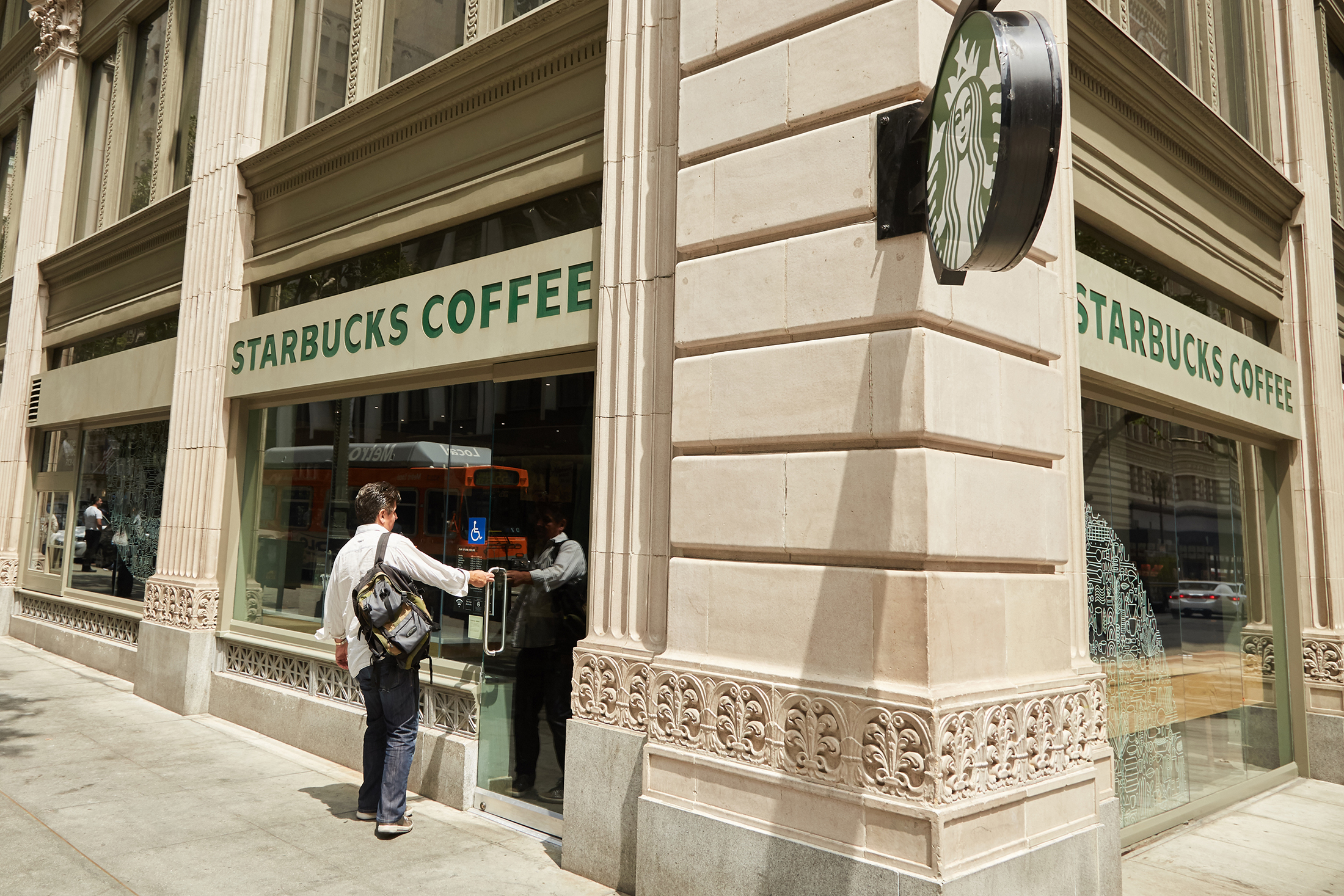
Employment lawyers and employers throughout the country who tuned in to hear the May 1 oral argument in the closely-watched Troester v. Starbucks (S234969; 2016 DJDAR 8568) case were treated to predictions and speculation about how employees may record working time in the ever-advancing technology age. Justices posed scenarios about timekeeping applications on smartphones, GPS systems, sensors and other technology. Counsel for Troester even suggested that time worked in the future may be measured in "nanoseconds" or even by a "chip" in the human body. These musings raise the question of whether the de minimis doctrine still has a place in California wage/hour law where timekeeping is increasingly automated. Yes, it does -- unless reasonableness is to be totally eliminated from the employment relationship, the de minimis concept remains necessary without regard to current or future advances in technology.
How Did We Get Here?
Troester, a former nonexempt Starbucks supervisor, originally filed the case in state court as a putative class action. He alleged that he was required to clock out and then perform certain closing shift tasks including transmitting sales data (essentially a password followed by a single keystroke command), activating the store alarm, locking the door, and walking employees to their cars. Starbucks removed the case to federal court and later prevailed on summary judgment. The district court concluded that the time at issue (presumed to be compensable for purposes of summary judgment) was de minimis and, therefore, Starbucks was not required to compensate employees for such time.
The question certified for review by the California Supreme Court was: "Does the federal Fair Labor Standards Act's de minimis doctrine, as stated in Anderson v. Mt. Clemens Pottery Co., 328 U.S. 680, 692 (1946) and Lindow v. United States, 738 F.2d 1057, 1063 (9th Cir. 1984), apply to claims for unpaid wages under the California Labor Code sections 510, 1194, and 1197?"
In Lindow, the 9th U.S. Circuit Court of Appeals enumerated the de minimis factors: "(1) the practical administrative difficulty of recording the additional time; (2) the aggregate amount of compensable time; and (3) the regularity of the additional work."
De Minimis Is Not Simply a Federal Rule Nor Is It New to California
As Starbucks noted in its answering brief, the legal maxim of "de minimis non curat lex" (the "law cares not for trifles") was codified in the California Civil Code since its inception in 1872. See Civil Code Section 3533. In the wage/hour context, the U.S. Supreme Court recognized the de minimis rule under the federal statue at least as early as 1946 (Anderson v. Mt. Clemens Pottery Co., 328 U.S. 680) and the California Division of Labor and Standards Enforcement acknowledged its validity three decades ago in a 1988 opinion letter (DLSE Op. Letter 1988.05.16.), followed by subsequent opinion letters and publicly-available manuals. Perhaps not surprisingly then, state and federal courts in California to have considered whether the de minimis analysis is appropriate for wage claims under the California Labor Code have consistently concluded that it is.
Also worth noting is the California Supreme Court's recent embrace of long-standing DLSE interpretations. For example, the high court recently rejected an employer's contention that it could not have predicted the method to calculate overtime owed on a certain type of bonus because "the interpretation was published in the DLSE Manual" and thus the employer had "every reason to predict it." Alvarado v. Dart Container Corp. of California, 4 Cal. 5th 542, 572 (2018). Here too, employers and employees are right to view the seconds and minutes of impractical to capture time as de minimis based on the framework long-provided by the DLSE.
Technology Doesn't Displace the Continued Need for a De Minimis Standard in California
As noted above, oral argument focused in part on whether technology should change the calculus. As an initial matter, some of the technology proffered would create issues rather than resolve them. The app on the employee's smartphone for example -- does that mean the employer has to provide such a device for hourly employees? If not, does the employer need to reimburse employees for data charges and other potential expenses associated with use of the application (under Labor Code Section 2802)? What about the time it takes to access the application and any issues with cellular reception or the like?
Rather than play out the app scenarios or try to solve for the seconds at a time, the de minimis doctrine already provides the framework. Indeed, the exiting procedures at Starbucks are only one of the myriad real-life circumstances where application of the rule is appropriate. Think of the retail employee who wishes to utilize the break room after a shift to wait for a ride or use the facilities to change clothes for after-work plans or into a uniform for another job (i.e., personal tasks that no one would consider compensable work) but is subject to security procedures before exiting the building. What about the office employee's time turning on or booting up the technology used to record time? Or the warehouse worker who arrives early to get coffee and avoid traffic but engages in talk regarding work activities for the day with co-workers?
Amicus briefs shined light on these realities where the de minimis analysis is the reasonable way to avoid leaving employers with the choice between paying employees for non-compensable, personal activities or strictly limiting employee activity. Further, as Starbucks argued, considerations of available technology figure in to the merits of the de minimis defense (such as the administrative difficulty in capturing the time) rather than to its existence.
The decision in Troester is in "any day now" territory and will likely come down by the expiration of the 90-day deadline.
This article has been prepared for informational purposes only and does not constitute legal advice. This information is not intended to create, and the receipt of it does not constitute, a lawyer-client relationship. Readers should not act upon this without seeking advice from professional advisers. The content therein does not reflect the views of the firm.
Submit your own column for publication to Diana Bosetti
For reprint rights or to order a copy of your photo:
Email
Jeremy_Ellis@dailyjournal.com
for prices.
Direct dial: 213-229-5424
Send a letter to the editor:
Email: letters@dailyjournal.com