


California Supreme Court,
Criminal
Nov. 27, 2018
Judge should have stopped trial when defendant went off his medication, court rules
In a unanimous opinion, the Supreme Court determined the superior court judge should have held a competency hearing instead of allowing the murder trial to continue.


Attachments
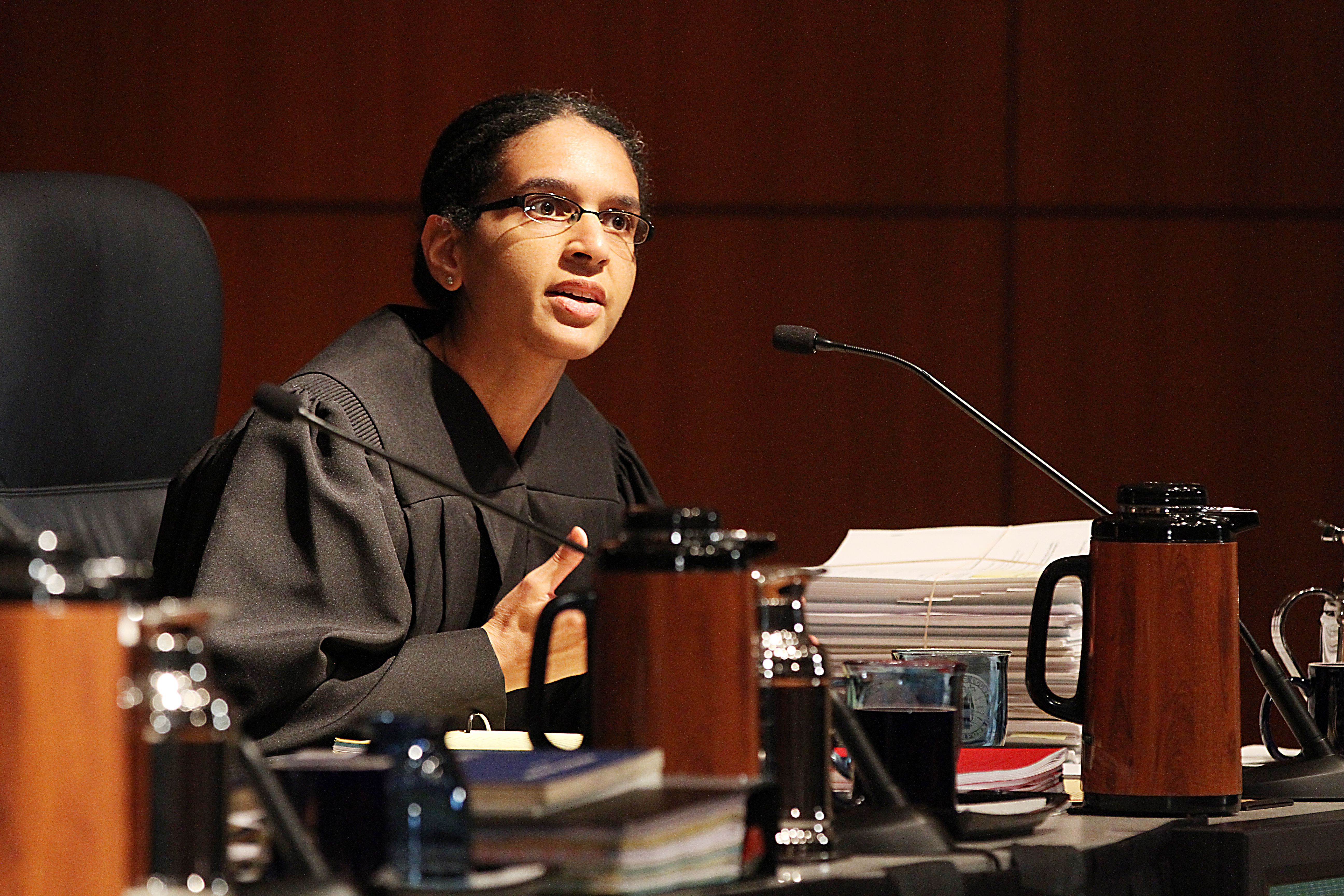
A judge violated a defendant's due process rights when he allowed a trial to proceed in spite of the defendant being off his psychiatric medication, the state's high court ruled Monday.
In a unanimous opinion, the Supreme Court determined Los Angeles County Superior Court Judge Robert J. Perry should have suspended criminal proceedings and held a competency hearing when defense counsel first raised doubts her client was not competent to continue. People v. Rodas, 2018 DJDAR 11108.
The high court ordered the 2nd District Court of Appeal to reverse its judgment upholding the convictions. The defendant, who was convicted of murder and other crimes, may be retried on those charges.
Joanna McKim, a San Diego-based attorney who represented the defendant before the Supreme Court, could not accommodate an interview but, in an email, wrote that she was pleased with the result.
The state attorney general's office did not respond to requests for comment.
Defendant Domingo Rodas, also known as Doudley Brown, was charged with the 2009 killings of three homeless men and with attempting to murder two more in the same area of Hollywood. DNA linking the three victims was found on Brown's knife and clothes, according to court documents.
Before Rodas' trial began in 2012, he was deemed incompetent and sent to a state mental hospital. A year later, after being treated with psychiatric medication, a medical director at Atascadero State Hospital issued a certification of mental competency to the trial court. That same day, Los Angeles County Superior Court Judge Charlaine F. Olmedo approved Rodas' readiness for trial and resumed criminal proceedings. The case was assigned to Perry.
Shortly after jury selection, Deputy Public Defender Carole L. Telfer raised doubts about her client's competence. In an in camera hearing with the judge, according to the record, Telfer submitted incomprehensible notes she received from her client and said he was responding to her questions using "word salad," a psychiatric phrase used to describe a confused or unintelligible mixture of random words, typical of advanced schizophrenia.
In front of the judge in March 2014, Rodas said he was not taking his medication.
Perry then asked what Justice Leondra R. Kruger, who authored the high court opinion, characterized as "leading questions" regarding Rodas' understanding of what was occurring and allowed the trial to continue.
Rodas proceeded to testify on his own behalf, against the advice of counsel, offering the jury an oral version of the incoherent notes his attorney had presented at the in camera hearing. Perry granted the prosecution's motion to strike the testimony as irrelevant.
The jury convicted Rodas of murder, with a special circumstance of murder by lying in wait, and of both attempted murders, but he was acquitted of two murder charges. In April 2014, he was sentenced to life without possibility of parole plus two additional life terms.
On appeal, the 2nd District Court of Appeal referred to Perry's March 2014 colloquy with Rodas and determined the defendant understood the nature of the charges and criminal proceedings. While the state hospital report connected Rodas' competence to his taking of medication, the appellate court said, it did not "condition" his competence on continued treatment.
The Supreme Court took the psychiatric reports much more literally, establishing the maintenance of competence as dependent on medication as a "critical fact." In addressing arguments made by the attorney general's office echoing the appellate ruling, Kruger wrote, "Given that human psychology rarely involves absolutes, a closer link between continued medication and defendant's mental competence could hardly be demanded."
Furthermore, the high court determined Perry should have immediately suspended proceedings to hold a competency hearing after the March 2014 hearing. Kruger wrote, "Nothing in the colloquy dispelled the specific concerns that counsel had raised about defendant's ability to rationally assist her in conducting his defense."
Citing the U.S. Supreme Court ruling in Pate v. Robinson, 383 U.S. 375 (1966), the Rodas court determined it was Perry's role only to decide whether substantial evidence of incompetence exists. "Resolution must await expert examination and the opportunity for a full evidentiary hearing," Kruger wrote.
The state Supreme Court fell short of setting new precedent when it came to remedy. According to the opinion, the court has never decided whether remand for a retrospective competency hearing is appropriate and did not stray from that in Monday's decision. It left the door open for similar cases but determined a retrospective hearing for Rodas would not be adequate. It instead reversed judgment, allowing Rodasto be retried.
Paula Lehman-Ewing
paula_ewing@dailyjournal.com
For reprint rights or to order a copy of your photo:
Email
Jeremy_Ellis@dailyjournal.com
for prices.
Direct dial: 213-229-5424
Send a letter to the editor:
Email: letters@dailyjournal.com