


Paul Manafort's cooperation with the Robert Mueller probe has called into question just exactly how bullet-proof joint defense agreements can be.
Such an agreement, designed to allow parties with aligned interests as criminal defendants to confidentially share information, can be risky.
Federal prosecutors said Manafort, who was convicted earlier this year of tax and bank fraud, has violated his cooperation agreement with them by relaying information to President Donald Trump's attorneys. Similarly , former National Security Advisor Michael Flynn's departure from his joint defense agreement with Trump foreshadowed Flynn entering into a plea deal.
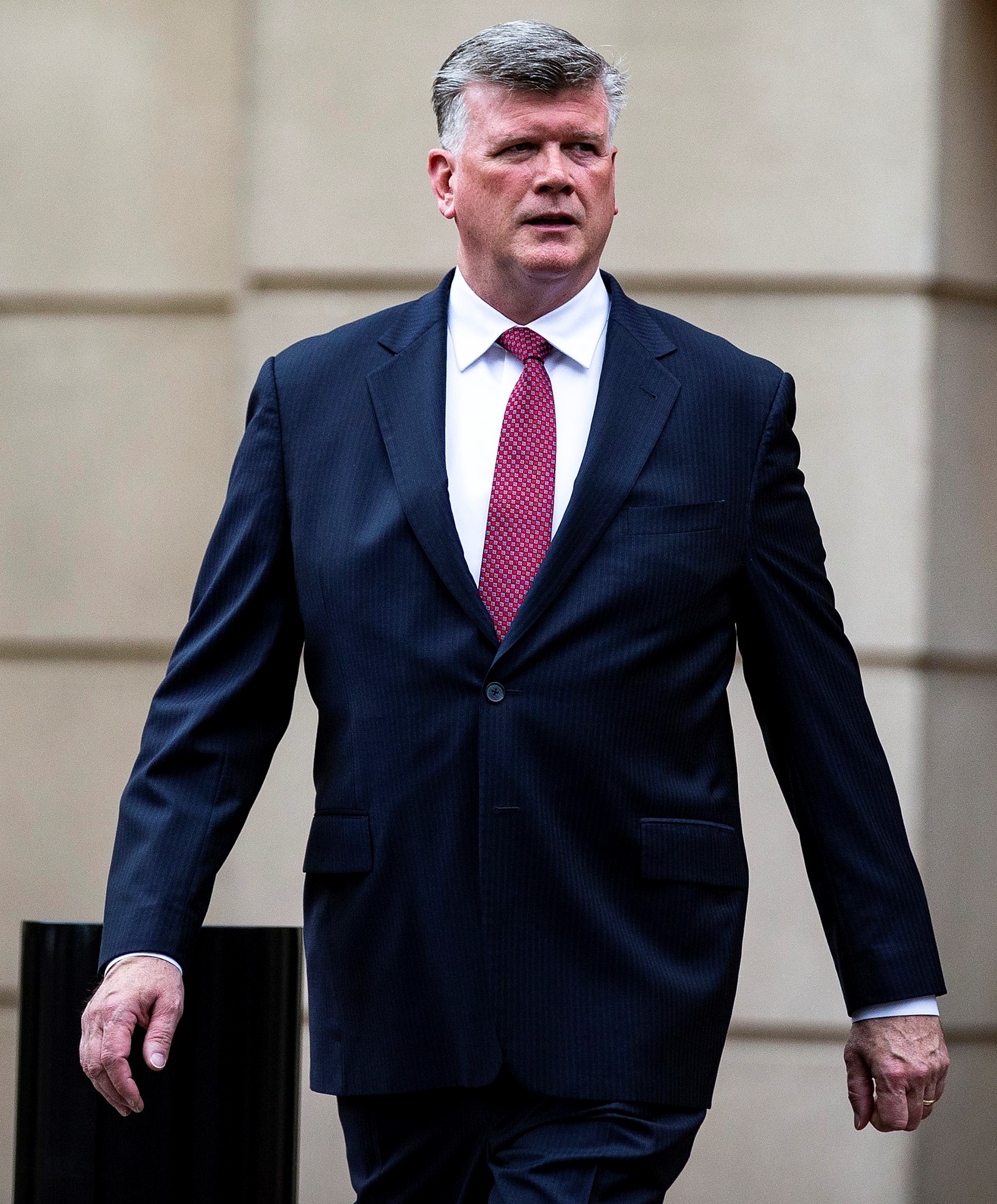
Manafort, represented by former Department of Justice Tax Division attorney Kevin Downing, has a defense agreement with Trump at the same time the former campaign manager is cooperating with the government over an investigation of possible Russian collusion regarding the 2016 election.
Marc Greenberg, a former assistant U.S. attorney for the Central District who now practices white collar defense, said Manafort can't have it both ways.
"If you were in Mr. Manafort's position the last thing you want to do is cooperate with the investigation but only do so on a 70 percent level. As a prosecutor, I have to know that I can trust you," said Greenberg, counsel at Tucker Ellis LLP.
The president has multiple agreements with defendants in the special counsel investigation but the one with Manafort seems to be the only one still holding up, sort of.
The courts are split on enforcing defense agreements. There are outliers.
In United States v. Henke, the 9th Circuit Court of Appeals reversed a conviction based on the uncertainty of a defense agreement. In that case, a defendant in a criminal case took a plea deal on a lesser charge on the understanding that he testify against other members of the defense agreement, but counsel for a co-defendant declined to cross-examine the witness, making the argument that he was basically his client. The 9th Circuit essentially said he was right. U.S. v. Henke, 222 F.3d. 633 (9th Cir. 2000)
"That's why if you are smart you want a written agreement because without it you have a conflict and have to get out of the case and bring in independent counsel. [(Joint defense agreements] work," said Greenberg.
In another 9th Circuit case, the absence of a written defense agreement ended up being devastating for a wife who faced insurance fraud charges along with her husband.
The wife's sentence was harsher, and her counsel decided not to call her husband as a witness. In a petition the wife said her counsel was ineffective as a result of not calling the husband as a witness. The government tried to subpoena communications between the couple but the wife's counsel cited joint defense privilege despite no written agreement existing. In finding the defense agreement irrelevant, the district court found ineffective assistance overrides joint defense confidentiality.
The appellate court rejected the government's argument that there was no defense agreement, remanding to the district court to determine when that agreement ended. United States v. Gonzalez, 669 F.3d 974, 977-978 (9th Cir. 2012)
"It's not all that clear that courts are going to enforce a joint defense agreement," said Loyola Law School professor Laurie Levenson.
The agreement "does not automatically give Manafort a privilege from sharing what another person says to him," she said.
Just talking with Mueller has nullified the defense agreement, even if Manafort hasn't explicitly withdrawn from it, Levenson said. Doing that dissolves attorney-client privilege, making Manafort's counsel, Downing, vulnerable to Mueller's seeking of any exchanges between Manafort and Trump, according to Levenson.
-- Justin Kloczko
Justin Kloczko
justin_kloczko@dailyjournal.com
For reprint rights or to order a copy of your photo:
Email
Jeremy_Ellis@dailyjournal.com
for prices.
Direct dial: 213-229-5424
Send a letter to the editor:
Email: letters@dailyjournal.com