


Civil Rights,
Labor/Employment,
U.S. Supreme Court
Apr. 23, 2019
Eyes on Gorsuch, Kavanaugh as high court accepts LGBT cases
The group of cases will allow the conservative majority court to resolve numerous circuit splits as well as a legal incongruence inside the federal government on how to apply discrimination protections under the Civil Rights Act of 1964.


The U.S. Supreme Court's decision to take up a trio of cases that will decide whether Title VII of the Civil Rights Act of 1964 applies to LGBT people will allow the court to resolve national circuit splits by either diverging from or codifying anti-discrimination practices by federal agencies, appellate courts, and various bodies of state law.
According to Adam P. Romero, legal scholarship and federal policy director at the Williams Institute at UCLA School of Law, the court's decision will remove or enshrine federal protections for millions of Americans at a crucial time.
"It's huge that the Supreme Court will decide the scope of Title VII as to sexual orientation discrimination and gender identity discrimination," he said. "Depending on how the court rules, workers across the country will either gain or lose federal protections, which is especially consequential for the 4.1 million LGBT people working in states without state-level protections,"
Title VII broadly prohibits discrimination "based on sex." The primary argument in favor of extending that definition rests on the concept that actions based on sexual orientation or identity are inextricable from sex. Those against it argue that "sex" in the law's context refers only to biological terms.
According to Romero, taking these cases allows the court to resolve national circuit splits. "An increasing number of courts have recently held that when an employer discriminates against someone for being gay or transgender, that employer impermissibly takes sex into account," he said.
Romero called the outcome "difficult to predict." "The Supreme Court unanimously extended Title VII to same-sex sexual harassment, even though Congress wasn't thinking about that when it enacted Title VII. The court could similarly rule here," he said.
All three cases involve a situation of alleged employment discrimination against a gay or transgender person. One involves a skydiving instructor who was dismissed after telling an employee he was gay. The other concerns a child welfare services worker from Georgia who said his firing for mismanaging funds was a pretext for termination based on his orientation.
In the final case, a 6th U.S. Circuit Court of Appeals panel sided with a transgender woman fired from a funeral home after she told her boss she wished to dress as a woman for work. Her boss fired her, and said it violated the dress code and allowing it violated "God's command." It will be argued separately from the other two cases.
That final case, R.G. & G.R. Harris Funeral Homes v. EEOC, comes with an additional wrinkle. The U.S. Equal Employment Opportunity Commission, a federal agency, brought the lawsuit -- but the federal government has briefed an adverse position.
The commission has increasingly applied Title VII protections to LGBT workers, though Romero said administrations have gone back and forth on following in its footsteps.
"The Department of Justice in the Obama administration was similarly evolving, but did not go as far as the EEOC as to sexual orientation. In the Trump administration, the Department of Justice reversed course and is now fully in conflict with the EEOC's position," he said.
In a brief to the Supreme Court, U.S. Solicitor General Noel J. Francisco wrote that the 6th Circuit erred.
"The court of appeals' conclusion that gender-identity discrimination categorically constitutes sex discrimination under Title VII is incorrect. As discussed above, the ordinary meaning of 'sex' does not refer to gender identity," he wrote. "The court's position effectively broadens the scope of that term beyond its ordinary meaning."
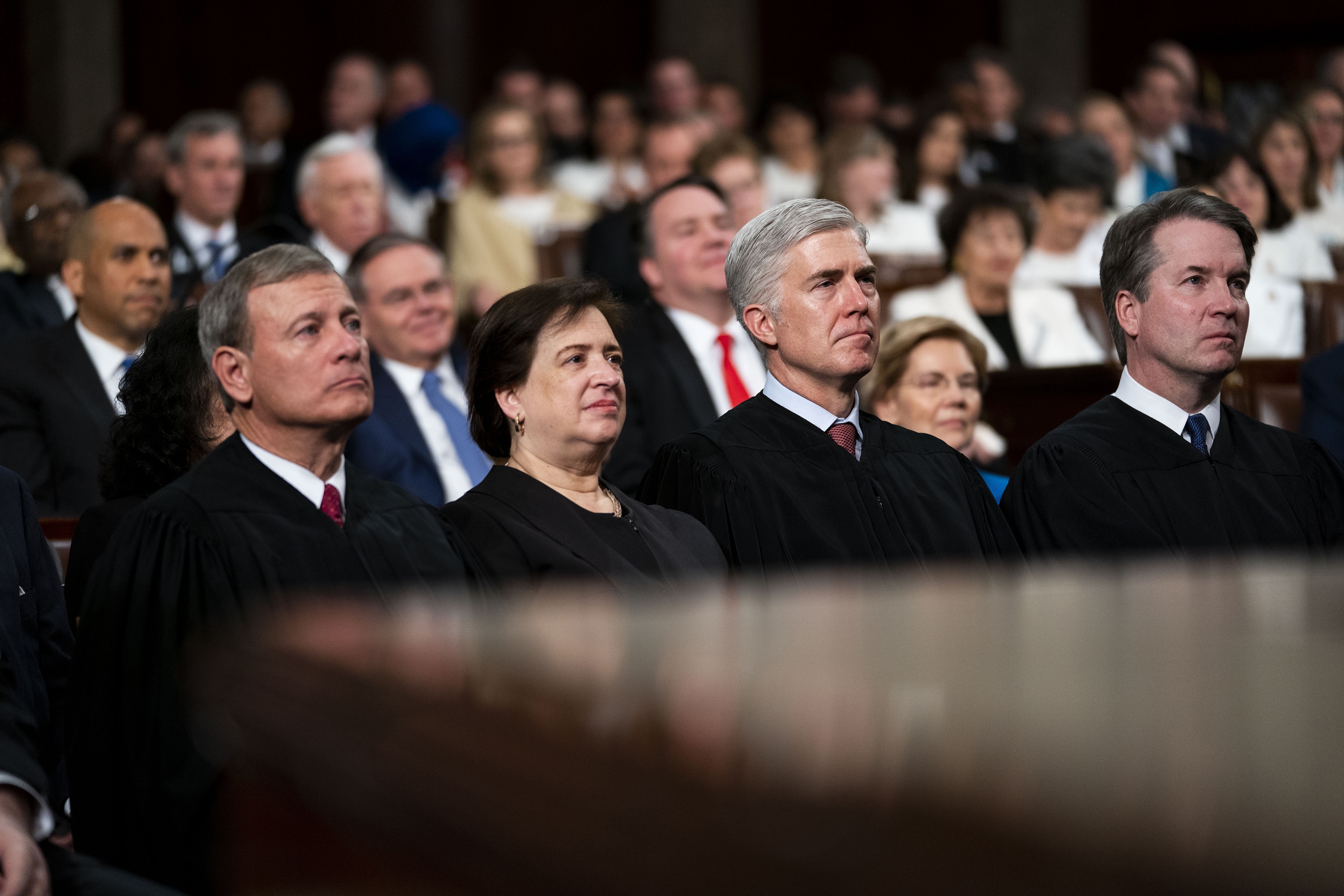
The cases will be argued in October, and offer the newly minted majority, including Justices Neil Gorsuch and Brett Kavanaugh, to leave a stamp on a hotly contested issue. The decision would likely be the biggest for LGBT Americans since gay marriage was legalized in 2015 by the court's decision in Obergefell v. Hodges.
Andy Serbe
andy_serbe@dailyjournal.com
For reprint rights or to order a copy of your photo:
Email
Jeremy_Ellis@dailyjournal.com
for prices.
Direct dial: 213-229-5424
Send a letter to the editor:
Email: letters@dailyjournal.com