


9th U.S. Circuit Court of Appeals,
Labor/Employment,
U.S. Supreme Court
Apr. 25, 2019
High court rules no class arbitration in ambiguous agreements
The U.S. Supreme Court has ruled that the Federal Arbitration Act bars class arbitration, even when the agreement is ambiguous, and regardless of a state contract law doctrine that might allow it otherwise, in a six-opinion decision.


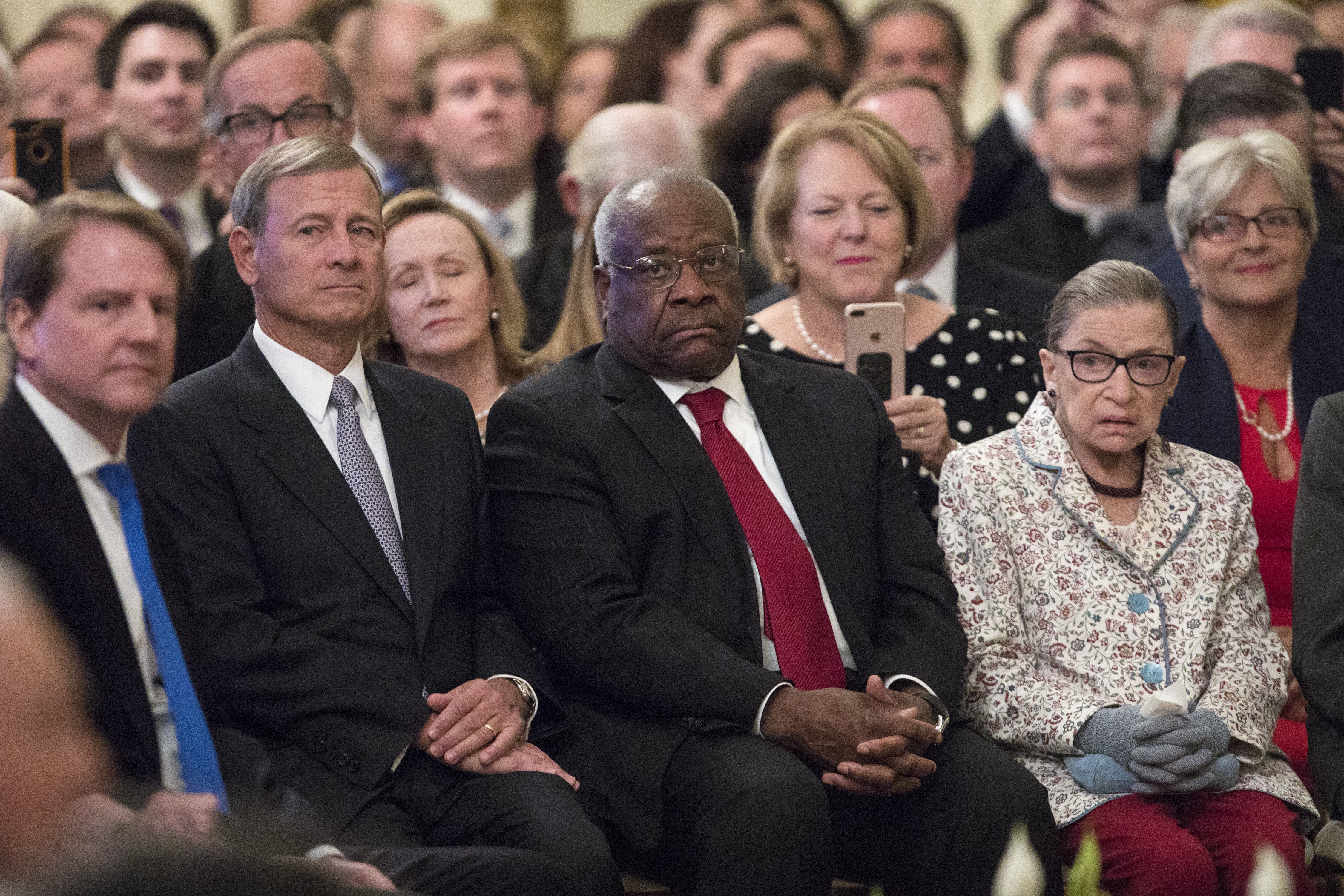
The Federal Arbitration Act bars class arbitration, even when the agreement is ambiguous, and regardless of a state doctrine that might allow it otherwise, the U.S. Supreme Court said Wednesday in a ruling that drew four dissents and one concurrence, all of which questioned the contravention of state contract law.
"Under the Federal Arbitration Act, an ambiguous agreement cannot provide the necessary contractual basis for concluding that the parties agreed to submit to class arbitration," Chief Justice John Roberts wrote for the majority.
The opinion in Lamps Plus v. Varela reversed a 9th U.S. Circuit Court of Appeals decision, in which the panel applied the California contract principle of contra proferentem, that ambiguous contracts be read against the drafter to remediate power imbalances between parties. It is the latest in a series of Supreme Court decisions asserting the supremacy of the Federal Arbitration Act in disputes where an agreement is present.
Though the majority opinion is relatively brief, five justices wrote in addition. All of them questioned Roberts' decision to supplant contra proferentem.
Justice Clarence Thomas wrote that he would have reversed the 9th Circuit without ever reaching contra proferentem.
Justices Ruth Bader Ginsburg, Stephen Breyer, Elena Kagan, and Sonia Sotomayor all filed dissents taking issue with Roberts' break from state law on the issue, along with the broader result.
"The court normally acts with great solicitude when it comes to the possible preemption of state law, but the majority today invades California contract law without pausing to address whether its incursion is necessary. Such haste is as ill-advised as the new federal common law of arbitration contracts it has begotten," Sotomayor wrote.
"Lamps Plus drafted the agreement. It therefore had the opportunity to insert language expressly barring class arbitration if that is what it wanted. It did not do so," wrote Kagan. "So California law holds that Lamps Plus cannot now claim the benefit of the doubt as to the agreement's meaning."

Roberts singled Kagan out in his opinion for overreacting, writing the decision is "far from the watershed" she thinks.
The Lamps Plus decision essentially extends the conclusion reached almost exactly nine years ago in Stolt-Nielsen S.A. v. AnimalFeeds International Corp.. In that case, it decided that the federal law bars class arbitration when an agreement is "silent" on the issue.
"Like silence, ambiguity does not provide a sufficient basis to conclude that parties to an arbitration agreement agreed to "sacrifice the principal advantage of arbitration," Roberts wrote, referring to expediency and inexpensiveness.
Roberts also seized on the concept of consent in arbitration, ruling that if an agreement is ambiguous, it cannot be read as consenting to a class remedy.
While attorneys agreed that the result in Lamps Plus came as no surprise, opinions on the court's foray into state contract principles varied.
"The majority opinion is consistent with recent decisions, but there's an issue of preemption of state law contract principle here that I think is the possible most far-reaching consequences of the opinion," said Ron Holland of McDermott Will & Emery.
"If the court isn't going to infer consent to class-wide arbitration from silence, it was unlikely it was going to infer consent through ambiguity," said Bryan C. Keane of Dorsey & Whitney LLP. "If you apply that doctrine to this issue, it really would undercut the court's prior opinions in this area. The court has made it clear it's looking for indicia of consent."
Other attorneys echoed dissenting opinions that the state principle is distinct from a state law deemed preempted in another case cited by the majority, which was struck down largely because it singled out arbitration agreements by holding class action waivers unenforceable.
"The court rejected the idea that such a rule was truly neutral, and held that it was preempted because it stood as an obstacle to enforcing arbitration agreements "according to their terms." The state law at issue in Lamps Plus," said Glenn Danas of Robins Kaplan LLP, "undoubtedly applies to all contracts, arbitration and otherwise."
"This reasoning seems to eviscerate the FAA's saving clause, as the court seems to be saying that any state law rule that has the effect of modifying the enforceability of an arbitration agreement is preempted, which of course means that the only state law rules not preempted are ones that have no effect on the agreement. This is literally an absurd reading of the FAA," he added.
Ginsburg's dissent called Roberts' emphasis on consent ironic, citing bargaining imbalances between workers and companies pushing arbitration agreements. She applauded companies and states that have taken recent action to carve out some claims from mandatory arbitration, or attempted to do away with it in any dispute, and said congressional intervention on the issue remains "urgently in order."
"The court has hobbled the capacity of employees and consumers to band together in a judicial or arbitral forum," she wrote.
"The fundamental premise of the FAA, which is almost 100 years old, is to enforce terms consented to by the parties to the arbitration agreement. That's a fine ideal when both parties have equal bargaining power, but that's not the reality," said Ronald L. Zambrano of West Coast Trial Lawyers.
"For all the exaltations the majority recites as to the advantages of arbitration, there's a reason employers and not employees bring the term to the 'bargaining table' with the employee," he added.
Megan Walker of Fisher & Phillips LLP said the court's recent jurisprudence made the result predictable, and the decision naturally strayed into state contract law.
"The purpose of the FAA is to place arbitration agreements on equal footing to other contracts. I think he almost had to look at the state law principles to reach the decision that he did," she said. "If a rule seems to target arbitration, even if it's a subtle targeting, then that is going to run counter to the act."
After Lamps Plus and Stolt-Nielsen, by process of elimination, class arbitration is left essentially to situations where a contract calls for it, she added.
"We know it's not silence and it's not ambiguity. That's leading us more and more to a conclusion that to have class arbitration, the agreement needs to expressly provide for it," she said
Andy Serbe
andy_serbe@dailyjournal.com
For reprint rights or to order a copy of your photo:
Email
Jeremy_Ellis@dailyjournal.com
for prices.
Direct dial: 213-229-5424
Send a letter to the editor:
Email: letters@dailyjournal.com