


Constitutional Law,
U.S. Supreme Court
May 14, 2019
Dissenting justice warns that high court majority is targeting precedents
The U.S. Supreme Court has ruled the state of California cannot be sued in a Nevada court against its will.


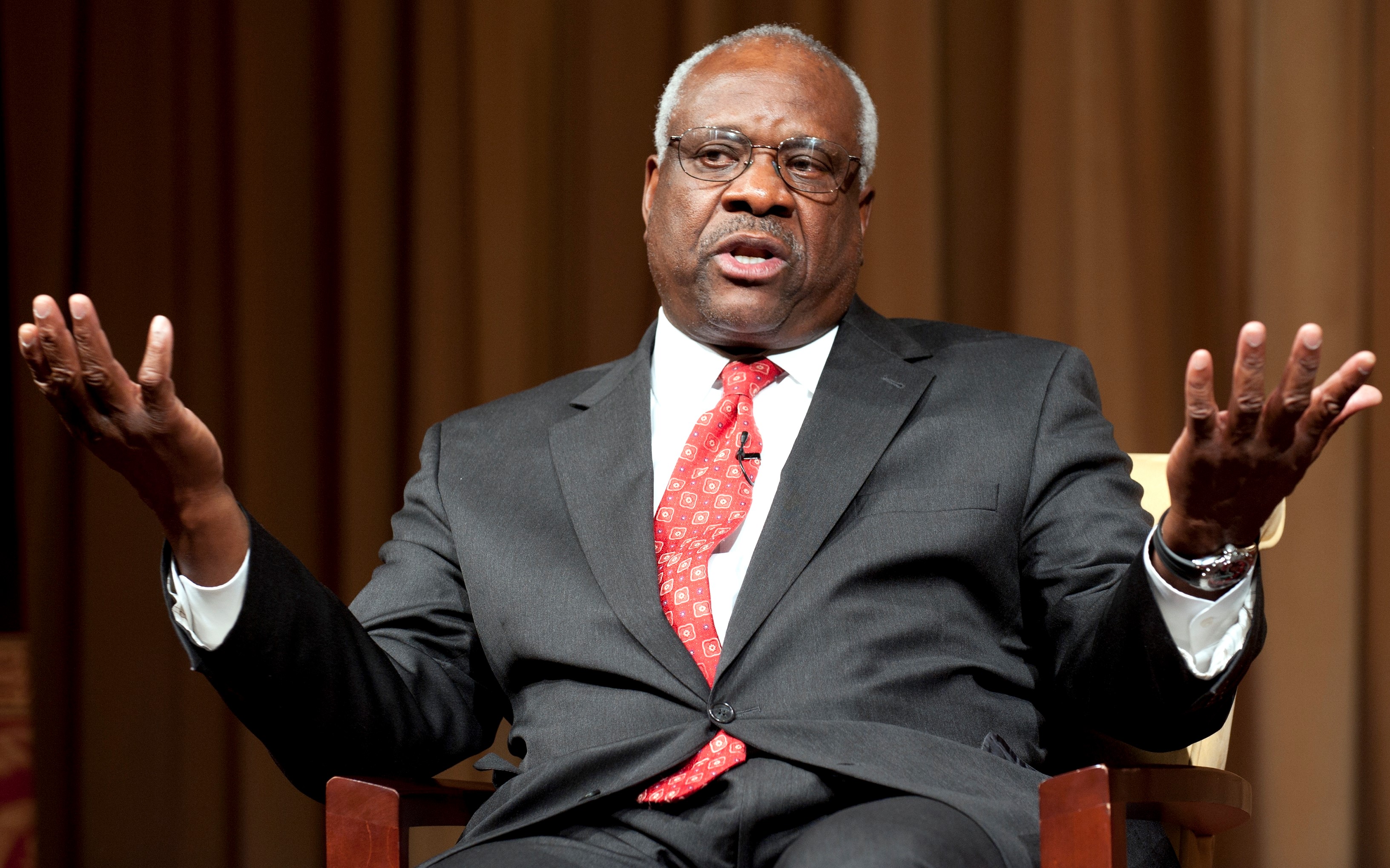
The state of California cannot be sued in a Nevada court against its will, a divided U.S. Supreme Court ruled Monday.
But the 5-4 ruling also provides a long-sought win for conservatives on the court over the principle of sovereign immunity. In a stinging dissent, Justice Stephen G. Breyer wrote that California's win could be a preview of the court overturning long-established precedents on abortion and other matters.
Franchise Tax Board of California v. Hyatt, 2019 DJDAR 3960 (U.S. May 13, 2019), offers a dizzying maze of coincidences and contradictions. A 28-year-old case overturned a 40-year-old precedent on its third trip to the high court. Erwin Chemerinsky, one of California's most famous living progressive legal scholars, argued against the state in the high court in January.
In 1991, the tax board audited Gilbert Hyatt, an inventor who owned a lucrative patent on computer microprocessors. He claimed to have sold his house and moved to Nevada, which has no state income tax. The tax board found Hyatt had not moved until months after he claimed, ruling he owed more than $10 million in tax and interest.
Hyatt, now 81, sued California's tax agency in Nevada courts. He won a nearly $500 million verdict that included $250 million in punitive damages, though the Nevada Supreme Court invalidated most of those damages.
The case made its second visit to the U.S. Supreme Court in 2016, facing a panel that had only eight members after the death of Justice Antonin Scalia and the refusal of Republicans in the U.S. Senate to consider the nomination of Merrick Garland.
In a 6-2 opinion by Breyer, the high court said Nevada courts attempted to sanction California's tax agency far more severely than the law would allow them to sanction Nevada's tax agency.
But the court deadlocked 4-4 on a question of whether it should revisit Nevada v. Hall, 440 U.S. 410 (1979). That case found the doctrine of sovereign immunity did not prevent plaintiffs from suing the state of Nevada in California's courts.
Many conservatives have long sought to do away with that decision for undermining the rights of states; 45 states joined an amicus brief urging the change.
The new opinion by Justice Clarence Thomas quickly erased any doubts how the court would rule with a five-justice conservative majority in place.
"Nevada v. Hall is overruled," Thomas wrote. "States retain their sovereign immunity from private suits brought in courts of other states."
"Hall's determination misreads the historical record," Thomas added, writing the U.S. Constitution "fundamentally adjusts the States' relationship with each other and curtails the States' ability, as sovereigns, to decline to recognize each other's immunities in their own courts."
"I am obviously disappointed," Chemerinsky, the dean of UC Berkeley School of Law, wrote via email. "As Justice Breyer said in his dissenting opinion, it was just because the majority agreed with the dissent from 40 years ago. I think it shows again that precedent matters little for these justices. It is a decision that will make it more difficult to hold state governments accountable."
Writing for the four-justice liberal minority, Breyer said much the same.
"The majority has surrendered to the temptation to overrule Hall even though it is a well-reasoned decision that has caused no serious practical problems in the four decades since we decided it," Breyer wrote. "Today's decision can only cause one to wonder which cases the Court will overrule next."
In case there was any doubt which precedent he had in mind, Breyer twice referenced Planned Parenthood of Southeastern Pa. v. Casey, 505 U. S. 833 (1992), which affirmed the right to an abortion under the Fourteenth Amendment.
"The Court went out of its way to reach the issue of whether to reverse Nevada v. Hall," said Timothy J. Droske, co-chair of the appellate practices group at Dorsey & Whitney LLP in Minneapolis.
"Reaching the issue, however, required disregarding an argument that the law-of-the-case doctrine precluded the Court's review, finding that argument waived, while also finding that the California Board had not waived its immunity," he added.
Justice Brett M. Kavanaugh provided the fifth vote. Anna-Rose Mathieson, co-manager of the California Appellate Law Group in San Francisco, said the ruling illustrates why there was so much attention paid during last year's confirmation hearings over how Kavanaugh would approach stare decisis.
In this case, she said, the court has made it clear they are looking at the "same set of facts" and saying a prior court interpreted them incorrectly.
"It's not one of these cases where the court now understands economics differently or the facts on the ground have changed," Mathieson said.
Malcolm Maclachlan
malcolm_maclachlan@dailyjournal.com
For reprint rights or to order a copy of your photo:
Email
Jeremy_Ellis@dailyjournal.com
for prices.
Direct dial: 213-229-5424
Send a letter to the editor:
Email: letters@dailyjournal.com