


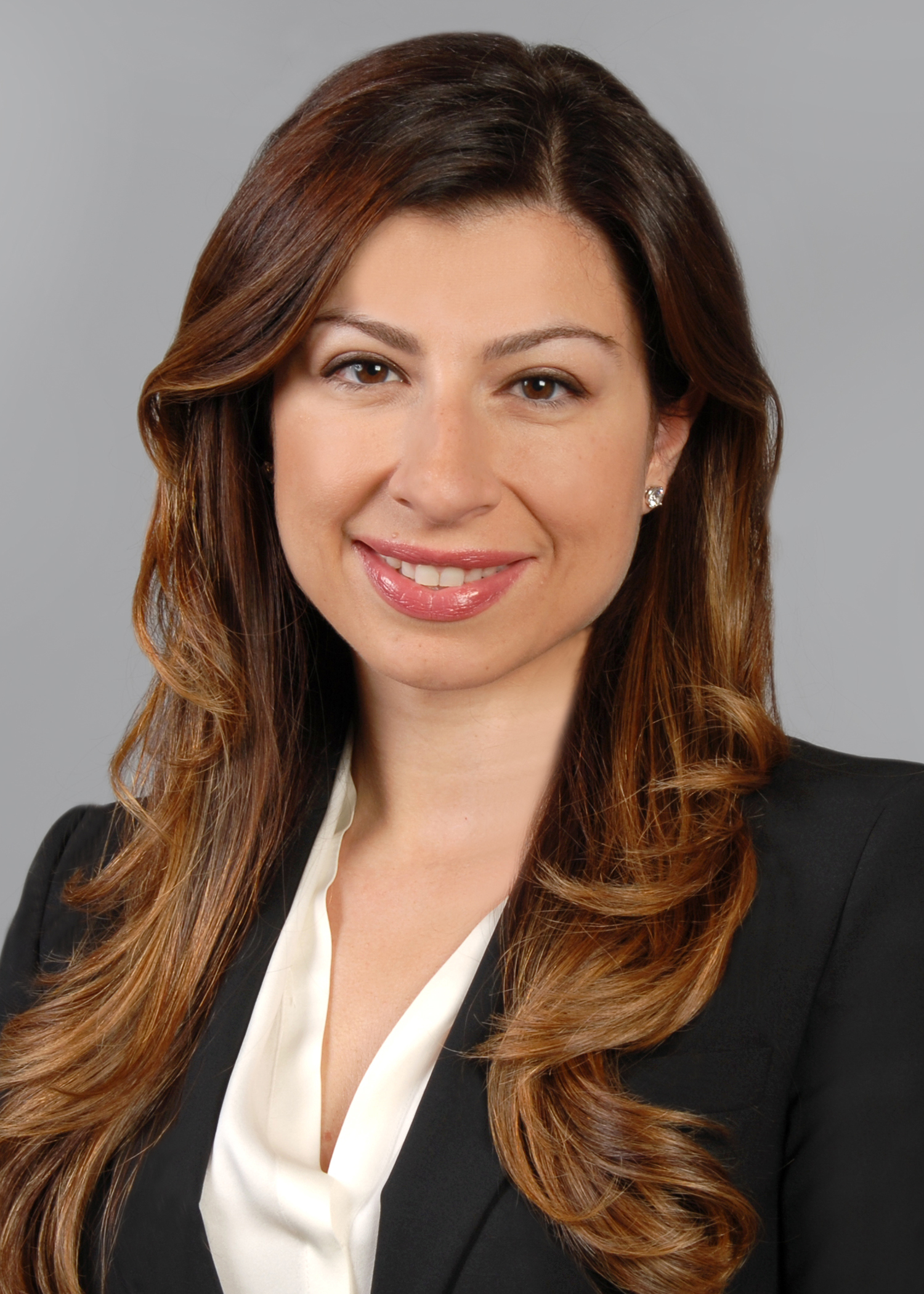
When the going got tough over the last pandemic year, Evangelis said she got through her crammed schedule—a dozen appellate arguments plus helping her fourth grader with his homework—by recalling the advice she got while clerking for Associate Justice Sandra Day O’Connor at the U.S. Supreme Court.
“When things were daunting, whether it was herding cattle on her Lazy B Ranch or facing a difficult legal issue, she’d advise you to just do it. Just start the work, and from that ideas would flow and the confidence to figure things out would come. When I heard that she once campaigned for Arizona state senate with three young sons in tow I realized that it would be possible for me to make partner at Gibson Dunn the year I was on maternity leave,” Evangelis said. “I channeled Justice O’Connor more during the past year than I ever have before.”
Evangelis, currently the co-chair of the firm’s global litigation practice, spoke on an early August day when she’d just heard she had won another important appeal, an interpretation of the gig economy’s relation to the Federal Arbitration Act. In a unanimous opinion in a case she’d argued, a 9th U.S. Circuit Court of Appeals panel held that Uber Technology Inc. drivers do not fall within the interstate commerce exemption to the act and are subject to the mandatory arbitration provisions in their contracts. Capriole v. Uber Technologies Inc., 20-16030 (9th Cir., op. filed Aug. 2, 2021).
The plaintiffs who sued Uber alleged they were misclassified as independent contractors and, as a result, denied wage-and-hour benefits afforded to employees under state law. Citing the coronavirus pandemic, they also sought a preliminary injunction on the ground that immediate reclassification was necessary so that drivers could accrue paid sick leave. U.S. District Judge Edward M. Chen of San Francisco denied the preliminary injunction. The 9th Circuit’s affirmance held that an arbitrator could impose an injunction if necessary.
“I’ve worked with Uber since 2015, and this case is in part the culmination of years of efforts of thinking long and hard about rideshare platforms and their novel issues,” Evangelis said. “I have heard from many drivers and business people who tell me how rideshares have changed their lives for the better.”
In May, Evangelis won for Walmart, reversing a $102 million judgment for a class of more than 50,000 employees over meal breaks. That 9th Circuit opinion erased the largest Labor Code section 226 statutory penalties and the largest court-ordered PAGA penalty ever recorded, Gibson Dunn said. It was the first published decision interpreting a key provision of California labor law. The panel held that the lead plaintiff lacked standing to bring the suit because he had not suffered meal break violations himself. Magadia v. Walmart Associates Inc., 19-16184 (9th Cir., op. filed May 28, 2021).
“This was an important issue of first impression,” Evangelis said. “We came into the case after trial when the firm and I were retained for the appeal.”
- John Roemer
For reprint rights or to order a copy of your photo:
Email
Jeremy_Ellis@dailyjournal.com
for prices.
Direct dial: 213-229-5424
Send a letter to the editor:
Email: letters@dailyjournal.com