


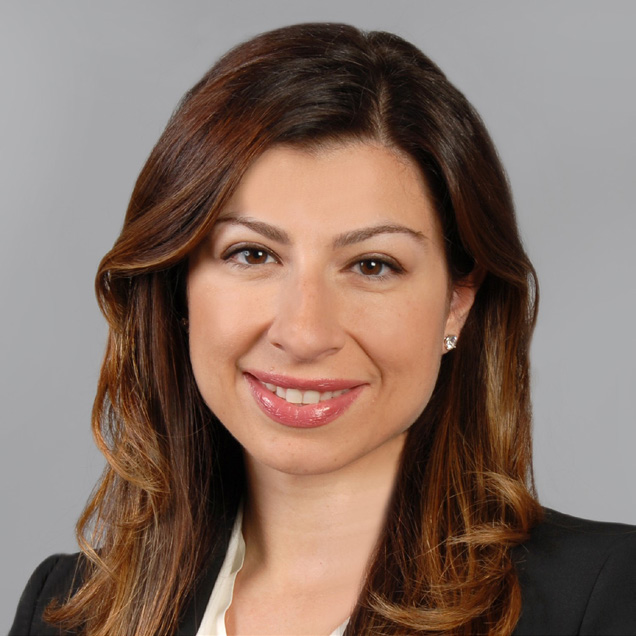
Theane D. Evangelis is a partner and co-chair of Gibson, Dunn & Crutcher LLP's litigation practice group. She is a summa cum laude graduate of New York University School of Law and a former clerk for former Associate Justice Sandra Day O'Connor at the U.S. Supreme Court.
In early May, she drew on her major win last year over companies' rights under the Federal Arbitration Act when she argued a case before Massachusetts' Supreme Judicial Court for client Grubhub Inc. Archer et al., v. Grubhub Inc., SJC- 13228 (Mass. S. Jud. Ct., argued May 2, 2022).
Her argument for Grubhub drew force from the ruling on similar issues she obtained at the 9th U.S. Circuit Court of Appeals for Uber Technologies Inc. A circuit panel held unanimously in a published opinion that the company's arbitration agreements with drivers are enforceable under the FAA despite the act's exemption for transportation workers "engaged in foreign or interstate commerce." Capriole v. Uber Technologies Inc., 20- 16030 (9th Cir., op., filed Aug. 2, 2021).
The panel concluded that Uber drivers' work was primarily local and intrastate in nature because only 2.5% of all Uber trips in the U.S. between 2015 and 2019 started and ended in different states.
"We got some momentum from Capriole," Evangelis said. "The law was unsettled and this became a central case that's being cited around the country."
Uber drivers alleged they were misclassified as independent contractors and denied wage-and-hour benefits that employees get under state law. The circuit's opinion to the contrary was an important interpretation of how gig economy workers will be treated under the FAA.
"We've been at the forefront on these issues," Evangelis said. "Capriole was consistent with the earlier opinion we obtained in Grice." There, a different 9th Circuit panel denied an Uber driver's petition for a writ of mandamus seeking to vacate a Los Angeles trial judge's order compelling arbitration. In re William Grice, 20-70780 (9th Cir., op., filed Sept. 4, 2020).
Evangelis argued that case too. "It laid the groundwork," she said.
The issue is currently at the U.S. Supreme Court; In January 2022, Evangelis filed an amicus brief for Uber urging the justices to follow the argument in Capriole. A decision is pending. Southwest Airlines Co. v. Saxon, 21-309 (S. Ct., argued March 28, 2022).
"Another great outcome in another unsettled issue of California law," Evangelis said.
Also last year Evangelis persuaded the 9th Circuit to vacate a $102 million judgment against client Walmart Inc. in the first published decision interpreting a key provision of California's PAGA statute. Magadia v. Walmart Associates Inc., 19- 16184 (9th Cir., op., filed May 28, 2021).
- John Roemer
For reprint rights or to order a copy of your photo:
Email
Jeremy_Ellis@dailyjournal.com
for prices.
Direct dial: 213-229-5424
Send a letter to the editor:
Email: letters@dailyjournal.com