


May 17, 2023
Kyocera: expert witness selection takes the stand
See more on Kyocera: expert witness selection takes the stand


Forty-four citing decisions later, courts, advocates, and scholars are still grappling with the aftermath of a Federal Circuit opinion described by one attorney as "a nuclear weapon that could kill experts" and "their clients' cases." John A. Dragseth, "Top Federal Circuit Decisions of 2022 that No One Told You About," IPWatchDog (Dec. 23, 2022)/.
The Federal Circuit's January 2022 opinion in Kyocera Senco Industrial Tools, Inc. v. International Trade Commission, 22 F.4th 1369 (Fed. Cir. 2022), hammered home the risks in presenting even a highly credential expert witness who lacks niche expertise. The Kyocera Court concluded that an expert with a Ph.D. in civil engineering "and extensive experience in the design and manufacture of fastener driving tools" was nevertheless "unqualified" to opine on infringement in a patent suit involving power nailers because he lacked specific "experience in power nailer design." 22 F.4th at 1376-77. This result teaches integral lessons about setting up experts for success in patent cases.
The Federal Circuit has made it clear that experts opining on "claim construction, validity, or infringement" must possess "ordinary skill in the art." Id. at 1377. The qualifications of a so-called "POSA" (Person of Ordinary Skill in the Art) are generally determined before the court construes any disputed claims. See Grace Instrument Indus., LLC v. Chandler Instruments Co.,57 F.4th 1001, 1008 (Fed. Cir. 2023). In Kyocera, the judge adopted the defendant's uncontested articulation of a POSA's qualifications, which required "at least two years of experience in power nailer design." 22 F.4th at 1376 (emphasis in original). Unfortunately for the plaintiff's expert, his Ph.D. and industry experience with "fastener driving tools" could not save him from the narrow construction the plaintiff's attorneys "seemed to adopt." Id.
The first lesson to be learned from Kyocera is to perform the necessary due diligence to find and retain individuals with expertise in the relevant technology or industry. This is easier said than done. Often firms have "repeat" experts whom they trust and have positive relationships with. It is straightforward to pick up the phone and call the firm's go-tos for civil engineering, computer science, or pharmacology when new matters arise, but a positive working history with a witness is no substitute for expertise in a niche subfield. How well an expert performs in front of a jury is irrelevant if that expert cannot make it to the witness stand in the first place. To give an example, in Takeda Pharmaceutical Co. v. Norwich Pharmaceuticals, Inc., No. 20-8966, 2022 WL 17959811, at *5, *33 (D.N.J. Dec. 27, 2022), the district court, citing Kyocera, found that a professor in the University of Florida's College of Pharmacy with a Ph.D. in Organic Chemistry was nevertheless "not credible" in a case concerning "salt forms of pharmaceuticals" because he "admitted that he had never performed a salt screen or worked with a dimesylate salt." Post-Kyocera, practitioners must beware the risk of retaining experts whose knowledge is tangential to the products or processes at issue.
The second lesson concerns practitioners' due diligence during the court's determination of a POSA's qualifications. Upon initial glance, the Kyocera opinion may appear unnecessarily discriminating, finicky, or even draconian, but those views are diminished by the fact that the plaintiff's attorneys acquiesced to the defendant's interpretation of the POSA's qualifications in the matter. Post-Kyocera, it is now more important than ever for practitioners to familiarize themselves with technical experts' backgrounds, including by thoroughly examining CVs and interviewing experts before retaining them. Practitioners must beware pitfall traps laid by their adversaries during the court's determination of the POSA's credentials. To avoid a worst-case scenario, attorneys from both sides may need to reach a mutually-agreeable definition of a POSA, lest experts from both sides be excluded. See Bial-Portela & CA S.A. v. Alkem Lab'ys Ltd., No. 18-304, 2022 WL 4244989, at *7 (D. Del. Sept. 15, 2022) (combining the definitions of a POSA from both sides and excluding one of the plaintiff's experts for lacking "a medical degree" and one of the defendant's experts for "not hav[ing] a Ph.D. in pharmaceutical sciences").
As judges and lawyers continue to use Kyocera as a sword to hack apart highly credentialed experts as unqualified in the operative field, practitioners must select and set up their experts for success. This means, first and foremost, selecting the right expert for the job, but it also means working to ensure that the court's ultimate definition of a POSA does not narrowly exclude an otherwise qualified expert.
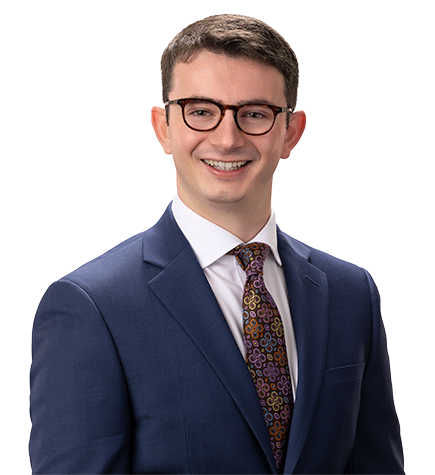
Erick Franklund is an associate at Irell & Manella LLP.
For reprint rights or to order a copy of your photo:
Email
Jeremy_Ellis@dailyjournal.com
for prices.
Direct dial: 213-229-5424
Send a letter to the editor:
Email: letters@dailyjournal.com