


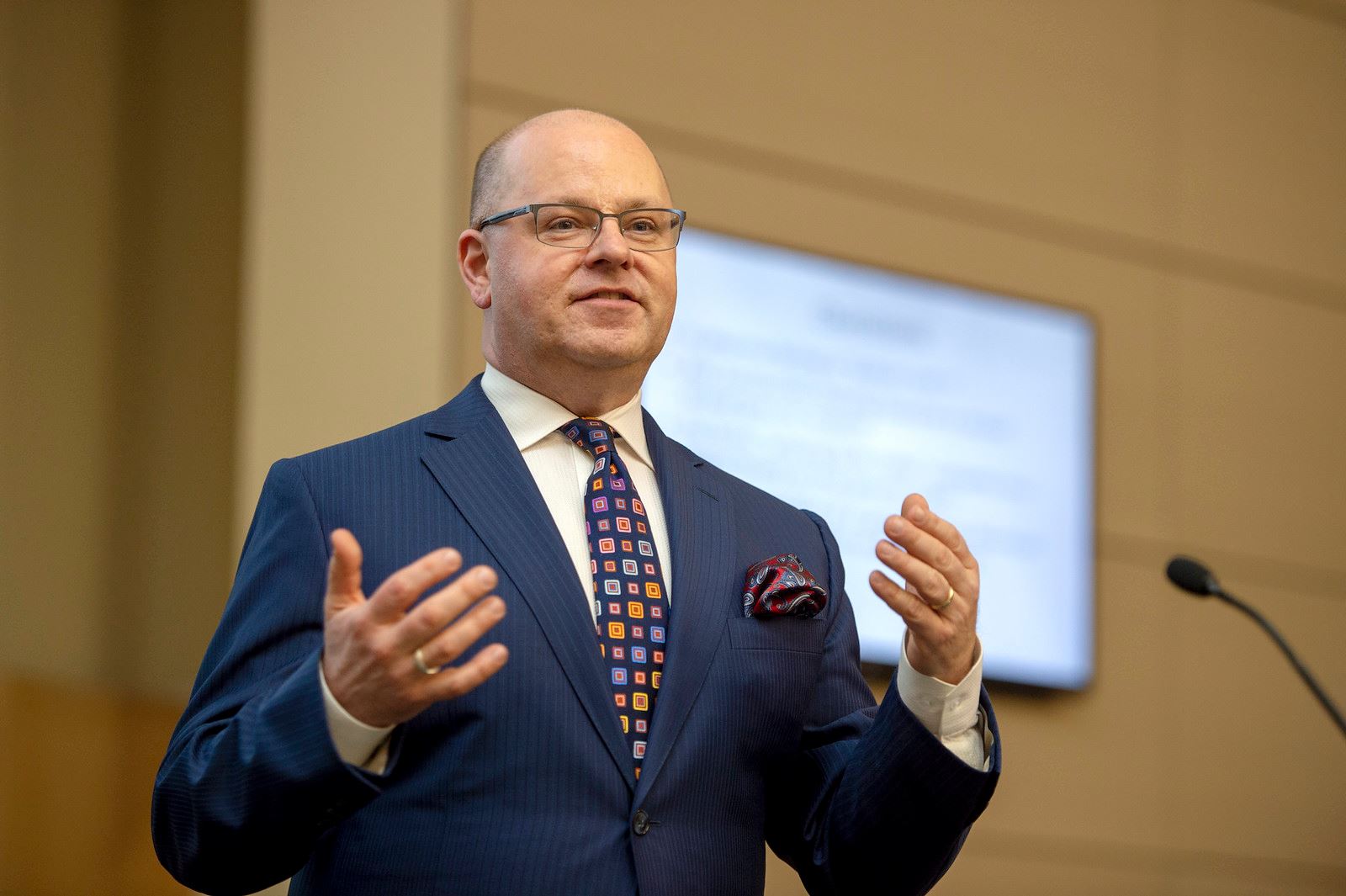
Mark A. Lemley is a prominent academic who maintains a strong presence in the world of litigation. He is the director of the Stanford Program in Law, Science and Technology. At Stanford, he teaches the law of robotics and AI, among other courses.
When a law firm he co-founded, Durie Tangri LLP, merged last year with Morrison Foerster LLP, Lemley joined another: Lex Lumina PLLC, where he is of counsel.
“The conflict problems associated with a thousand-lawyer firm like MoFo were just too great for the way I practice and write,” Lemley said.
His recent publications range from an article on “The Antibody Patent Paradox” to a working paper that analyzed more than 2,200 life sciences companies and found a network of “potentially illegal interlocked boards.”
His new shop, Lex Lumina, is small and unusual. “We are six lawyers, and five of us are law professors,” Lemley said. “So most of us are doing this part-time.”
Lemley, who was number one in his class at UC Berkeley School of Law, has an eclectic client roster that extends from Genentech Inc. to Dykes on Bikes. “A fun range,” he said.
He’s been teaching and writing on robotics and AI issues for about four years. Potential clients noticed. “That’s probably why I got hired,” he said, by generative AI pioneer Stability AI Ltd., an open-source image company, to defend it against a class action complaint alleging copyright infringement. Andersen v. Stability AI Ltd., 3:23-cv-00201 (N.D. Cal., filed Jan. 13, 2023).
AI image generators are modern-day collage or assemblage tools that violate the rights of millions of artists, the complaint alleges. Lemley’s motion to dismiss argues that his client’s software enables users to create new and unique images from word prompts, images that do not infringe.
Another front attracting Lemley’s interest has been venue choice issues emerging from the courtroom of U.S. District Judge Alan D. Albright of Waco, Tex., who has been known to hoard cases over the protests of lawyers. Lemley has successfully argued for venue changes to the Northern District of California for clients and backed U.S. Senate inquiries into the situation.
Lemley said the situation is better now after federal appellate judges stepped in. “There’s a broader question of whether we should have single judge districts, but the patent problem is pretty much solved in Waco.”
In a case at the intersection of IP and antitrust, Lemley and colleagues won a $10 million settlement for HIV drug purchasers from one defendant; others are set for trial in June. Staley v. Gilead Sciences Inc., 19-cv-02573 (N.D. Cal., filed May 14, 2019).
“I’m advising on the trial and I’ll be doing the inevitable appeal,” Lemley said.
—John Roemer
For reprint rights or to order a copy of your photo:
Email
Jeremy_Ellis@dailyjournal.com
for prices.
Direct dial: 213-229-5424
Send a letter to the editor:
Email: letters@dailyjournal.com