


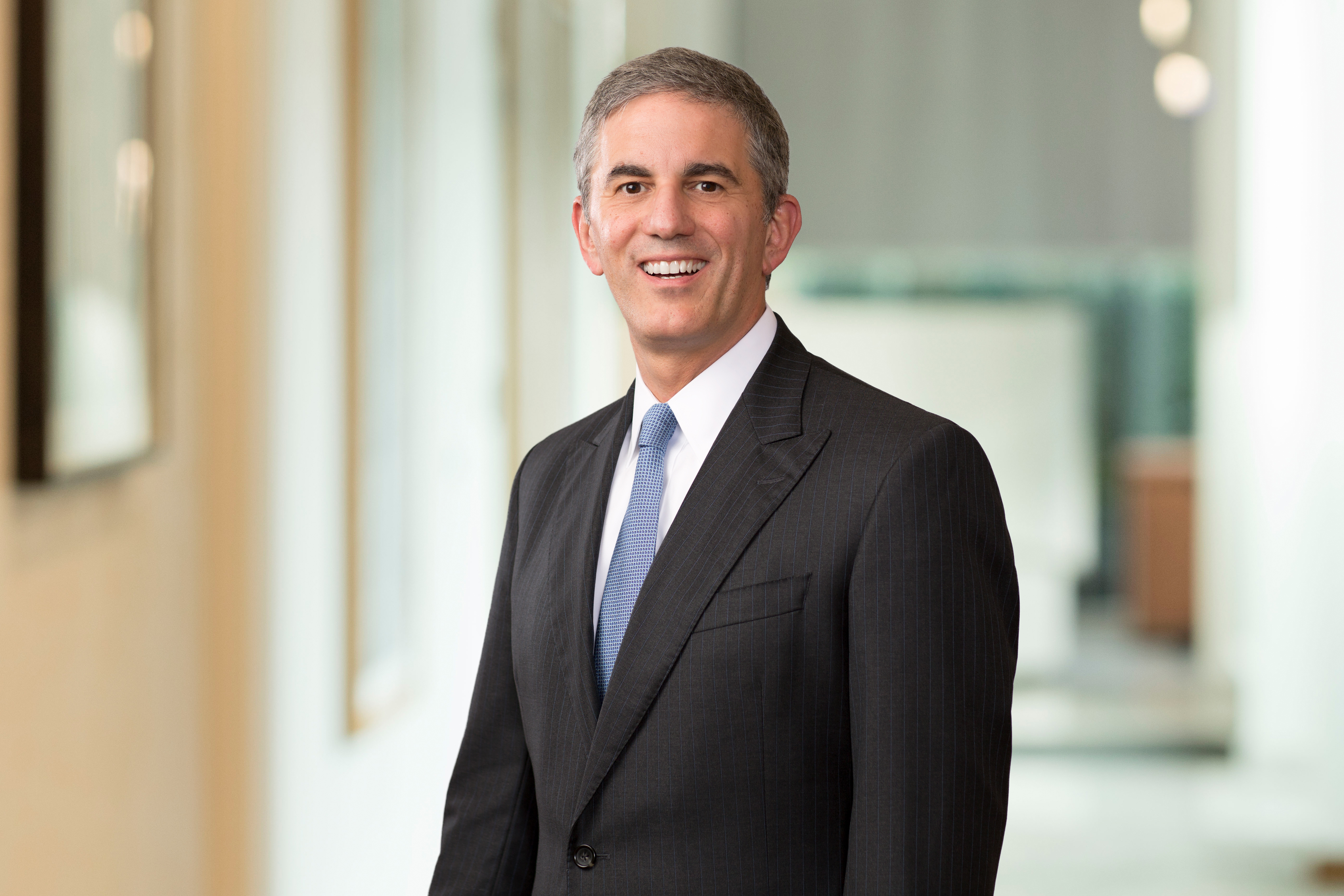
The Patent Office has set up the battle for the right to patent CRISPR-Cas9 gene-editing technology, much like March Madness, according to Anthony Insogna.
The better-known combatants, a group led by the University of California and a group led by MIT and the Broad Institute, are in the first bracket, while his client, Korean biotechnology company ToolGen Inc., is in the second. Insogna, who heads Jones Day’s IP practice, is confident his client will come out on top.
“We had to play both MIT and UC in two separate [PTAB interference] cases, and we won both of ours,” he said. “Now we get to play the winner of the Broad versus UC battle. That’s up at the Federal Circuit now.” The Broad Institute Inc. v. ToolGen Inc., Interference No. 106,126; The Regents of the University of California v. ToolGen Inc., Interference No. 106,127 (PTAB).
The dispute puzzles the public because researchers at the University of California and the University of Vienna won the Nobel Prize for discovering CRISPR, but the Broad-MIT group won a patent on how to use the discovery in mammalian cells, he said. “Well, ToolGen believes we did it before Broad.”
Insogna describes himself as “basically a life sciences or pharmaceutical patent attorney” who, for 30 years has been helping pharma and biotech companies obtain patents and enforce them, primarily against generic drugmakers. “Everything I do is with a team,” he said. “I work with a lot of smart people who are very helpful to me.”
In the last decade, he has been involved in 83 IPRs with an enviable success rate.
Although he usually litigates against generics, he represents companies seeking to produce biosimilar therapeutics comparable to existing FDA-approved biologics.
Insogna acknowledges that the public and Congress aren’t too happy with big drug companies and high drug prices these days. But he said the U.S. patent system provides protection to innovators to reward them for creating technology and making it public. “Without the U.S. pharmaceutical industry, we probably wouldn’t have gotten the COVID vaccines so fast.”
One small company he is pleased to represent is co-owned by a doctor who has developed a greatly improved version of the cyanide antidote, sodium thiosulphate. It also is used to prevent hearing damage to babies being treated for cancer. Currently, he and a team are representing the company in a patent infringement action against a generic drugmaker. Hope Medical Enterprises Inc. v. Accord Healthcare Inc., 1:22-cv-00978 (D. Del., filed July 26, 2022).
“Their patents are being challenged because once you’re successful, then generics want to copy you.”
— Don DeBenedictis
For reprint rights or to order a copy of your photo:
Email
Jeremy_Ellis@dailyjournal.com
for prices.
Direct dial: 213-229-5424
Send a letter to the editor:
Email: letters@dailyjournal.com