


Corporate
San Francisco
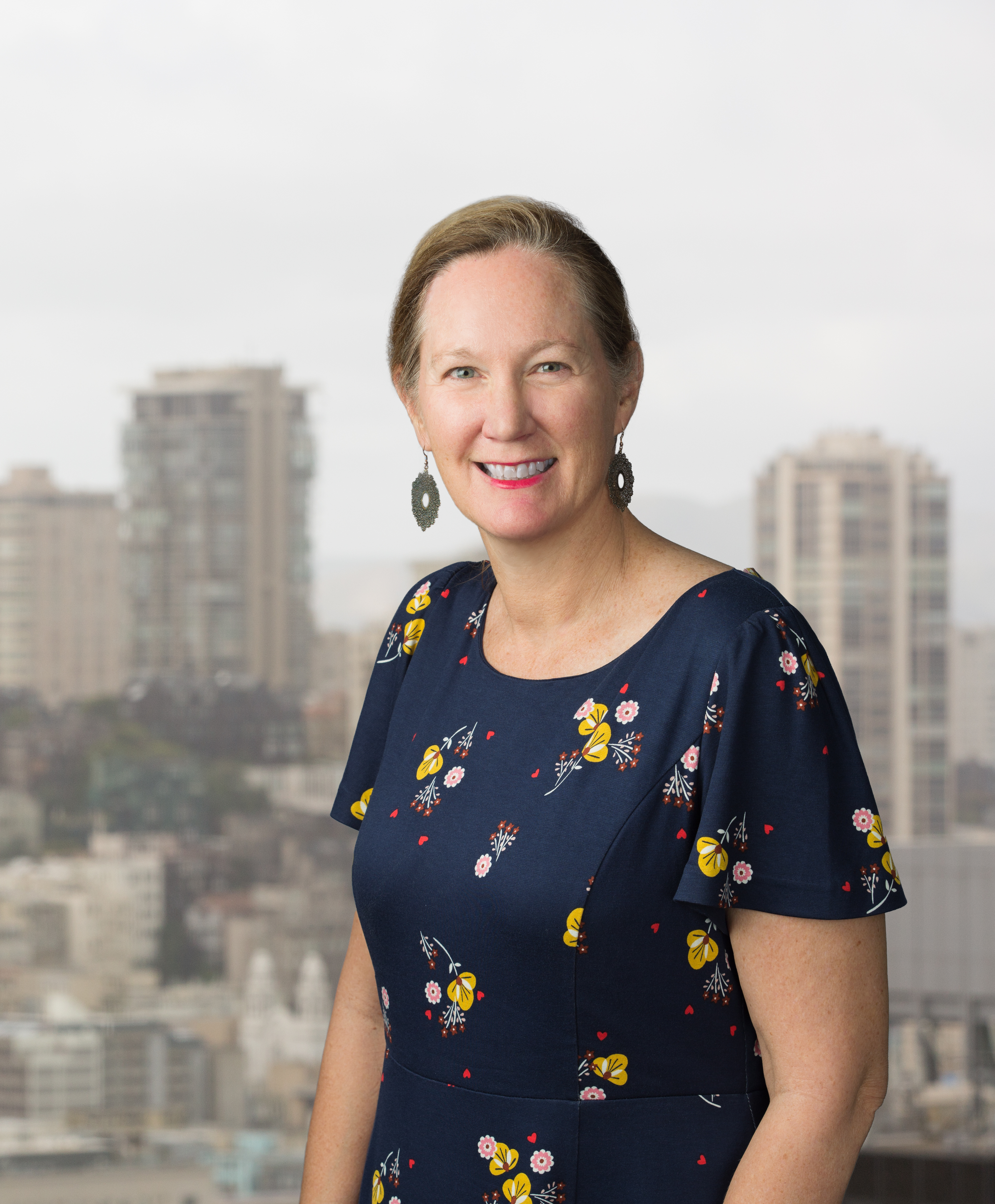
For the past 25 years, Suz Mac Cormac has been thinking of ways to combine her desire to address climate change and inequality with her profession as a lawyer and come up with ways to benefit the public through mainstream corporate and capital markets solutions (as an alternative to foundations and philanthropy which alone do not have enough capital to solve the problems).
As a transactional attorney for Morrison Foerster in San Francisco, she advises a myriad of clients on how to form public charities, foundations and social welfare programs. She co-chairs her firm's environmental, social, and governance (ESG), social enterprise and impact investing practices, along with the food and agriculture industry group.
"I help companies, private and public, when they want to achieve greater impact," she said. "There are many options but one involves converting into a public benefit corporation." Another involves establishing a side-car public charity as opposed to a private foundation.
One of these was Generate Capital, a platform that converted into a PBC and is investing in sustainable projects to mitigate climate change. Another is Revolution Foods, a California food contractor to schools. With its new business model (combing both a PBC with a fiscally sponsored charity), the company doubled down on its focus to feeding students in low-income communities.
"Revolution Foods established a fiscally sponsored public charity that took philanthropic capital, purchased lunches and then ended up feeding millions and millions of kids during the pandemic because they were on free and reduced lunch and they couldn't get meals because the schools were closed," Mac Cormac said.
In an unusual move, Mac Cormac led the social media benefit company Change.org through a series of transactions where the company's foundation became the sole stockholder. This created the world's largest nonprofit tech platform for social change.
"It's still a for-profit, but it's a public benefit corporation," she said. "The private investors donate so that the entity ends up being owned by a public charity. It's called the Foundation, but it's actually a public charity. So it is going to be held in public trust."
Other companies are environmental in nature, like Propeller, which invests in companies and founders tackling climate change through ocean solutions and technology. Mac Cormac helped them form an investment fund that primarily focuses on backing and incubating startups in areas such as ocean carbon removal, algae packaging, offshore wind, desalination and shipping decarbonization.
--Tori Richards
For reprint rights or to order a copy of your photo:
Email
Jeremy_Ellis@dailyjournal.com
for prices.
Direct dial: 213-229-5424
Send a letter to the editor:
Email: letters@dailyjournal.com