


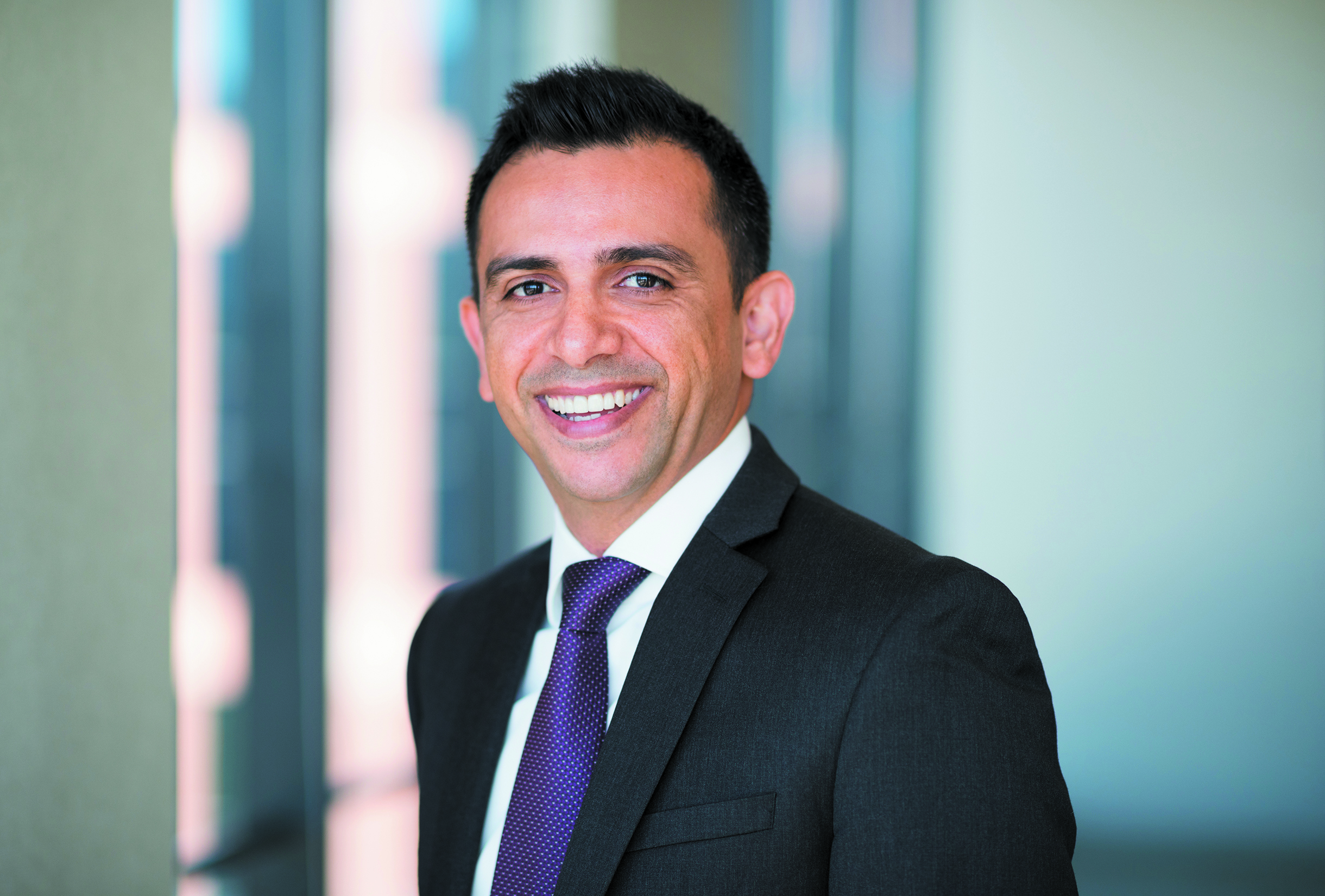
Before his current 18-year journey into IP litigation, Ali S. Razai was a molecular biologist and reflects fondly on his roots.
"I was drawn to IP because it allowed me to simultaneously stay immersed in law and the sciences," he said, adding: "One of my first professional mentors was Jim Marks, who is one of the world's experts in antibody engineering. His passion, drive, creativity, and humility were inspirational. Then, in the course of my career at Knobbe Martens, I have been able to learn from some of the most skilled attorneys in intellectual property."
More recently, Razai is representing Spectrum Solution, whose innovative DNA saliva collection device received Emergency Use Authorization from the FDA for COVID-19 testing.
When Spectrum faced patent infringement lawsuits from competitors DNA Genotek and Longhorn Diagnostic, Razai's team secured a decisive victory. He and his team achieved summary judgment of non-infringement against DNA Genotek and invalidated the claims of their patent through an Inter Partes Review.
Similarly, they instituted IPR against five of Longhorn's patents, leading to the invalidation of all asserted claims and an unprecedented cancellation of Longhorn's patents by the PTO as a sanction for misconduct. This sanction is currently under review by the director of the PTO, with the district court matter on hold pending the conclusion of this review.
One obstacle involved the opposing party suppressing evidence, Razai said.
"After our team worked diligently to discover the issue, we were confronted with a difficult decision whether to seek sanctions for Longhorn's conduct," he said. "Given the prejudice to our client, we were left with no choice. In an Order granting Spectrum's Motion for Sanctions, the Patent Trial and Appeal Board found that Longhorn 'committed an egregious abuse of the PTAB process' during the IPR proceedings and -- in an unprecedented sanction -- canceled all 183 claims across the five challenged patents."
Noting observations, Razai said he has, anecdotally, seen the longer pendency of cases.
"This may be caused by the continuing clearance of the backload of cases created during the pandemic, increased litigation defense budgets, or other unidentified factors," he said. "But the trends that my teams have seen over the past few years have been cases slower to settle and longer times to trial."
For reprint rights or to order a copy of your photo:
Email
Jeremy_Ellis@dailyjournal.com
for prices.
Direct dial: 213-229-5424
Send a letter to the editor:
Email: letters@dailyjournal.com