


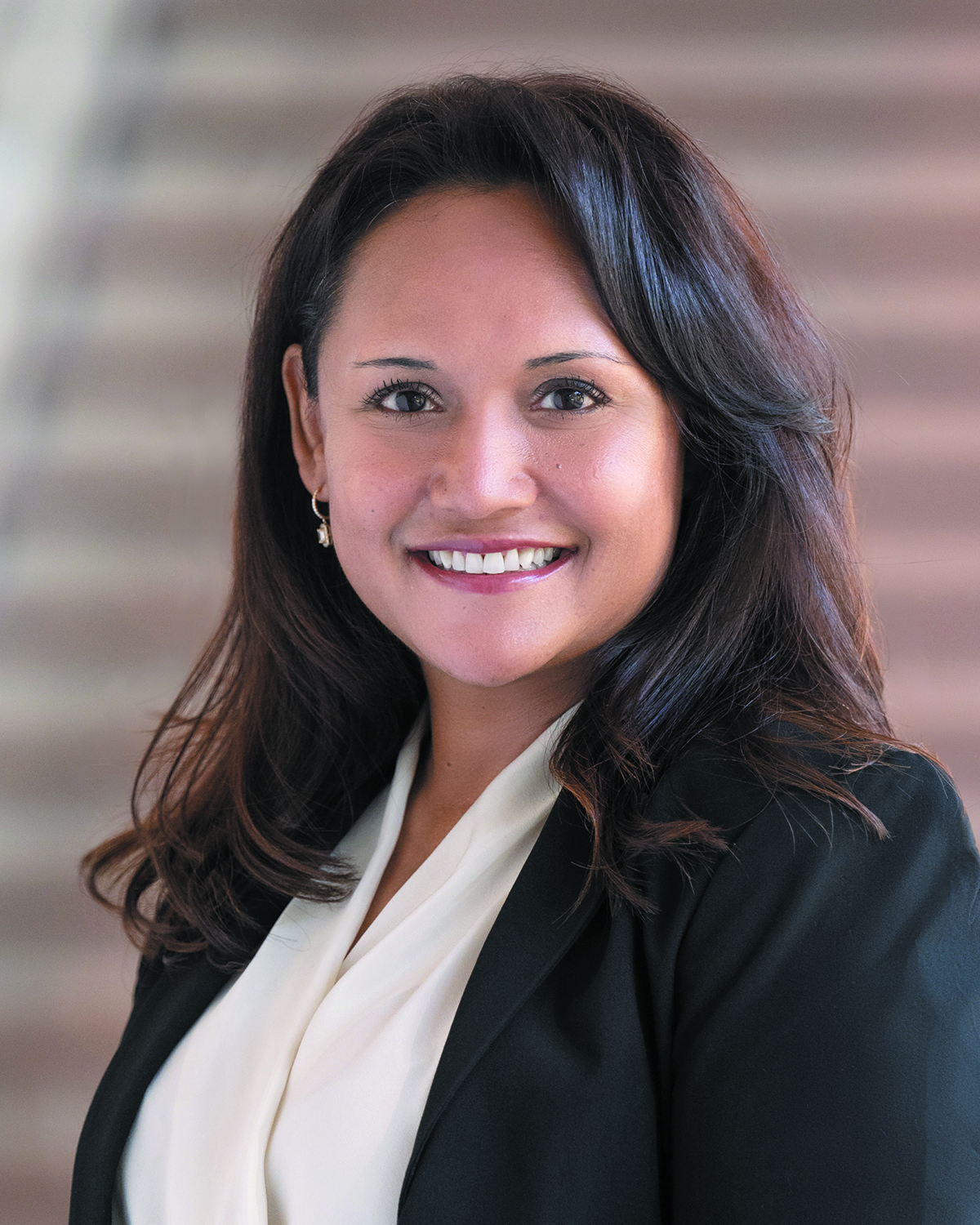
Manita Rawat's career in intellectual property law spans nearly two decades, a journey that began not only due to her technical background with an undergraduate degree in science and engineering, but also her profound passion for the field.
A patent law equity partner, her gamut ranges from cutting-edge software technologies, including various online platforms, mobile applications and, more prominently nowadays, artificial intelligence.
"AI has been instrumental in shaping my career," Rawat said. "Ten years ago, I was fortunate to help lay the groundwork for budding AI-related technologies. At the time, few people foresaw that it would become such a key part of our future. Now, as the increasingly ubiquitous technology is becoming a valuable tool for many companies, I can say I've been working on it for a long time."
One of her recent clients was Chegg, an American education technology company. Rawat and her team filed and prosecuted patent applications with the US Patent and Trademark Office to allowance related to Chegg's online education platforms that include the use of AI, such as machine learning, and are deemed to represent the future with respect to education.
Rawat also performs similar work for Wal-Mart, relating to its online retail platforms.
One such patent prosecuted to allowance by Rawat and the team related to improving the searching mechanisms provided to a user to enable accurate search results when a user is searching for goods on an online retail platform. The invention utilizes computing technology that incorporates machine learning and AI to obtain data from the user and to conduct an analysis of the data to provide accurate search results.
Rawat's journey, however, has not been without challenges. As a woman in the predominantly male-dominated sectors of computer science and engineering within patent law, she has faced gender stereotypes and biases.
Instances where her presence as a patent lawyer was questioned due to gender expectations underscore the obstacles that women like her have had to overcome.
"Particularly in the areas of computer science and engineering, patent law practice remains predominantly male-dominated," Rawat said. "There were times when I walked into a room and the client asked, 'Where's the patent lawyer?' They were so used to seeing a man. Women who graduated in my time were viewed as pioneers. It's important to acknowledge these challenges and work towards a more inclusive and diverse field."
Discussing AI again, Rawat said the technology is rapidly growing and patent attorneys need to understand the intricacies of the technology to determine whether their client's AI software is eligible for patenting and research the steps companies must take to ensure patentability in the U.S. and internationally.
"Software has always been a bit tricky to determine its subject matter eligibility for patent law purposes," she said. "As AI continues to advance, I predict we'll see subject matter eligibility standards develop, with potential guidance from courts and Congressional action."
For reprint rights or to order a copy of your photo:
Email
Jeremy_Ellis@dailyjournal.com
for prices.
Direct dial: 213-229-5424
Send a letter to the editor:
Email: letters@dailyjournal.com