


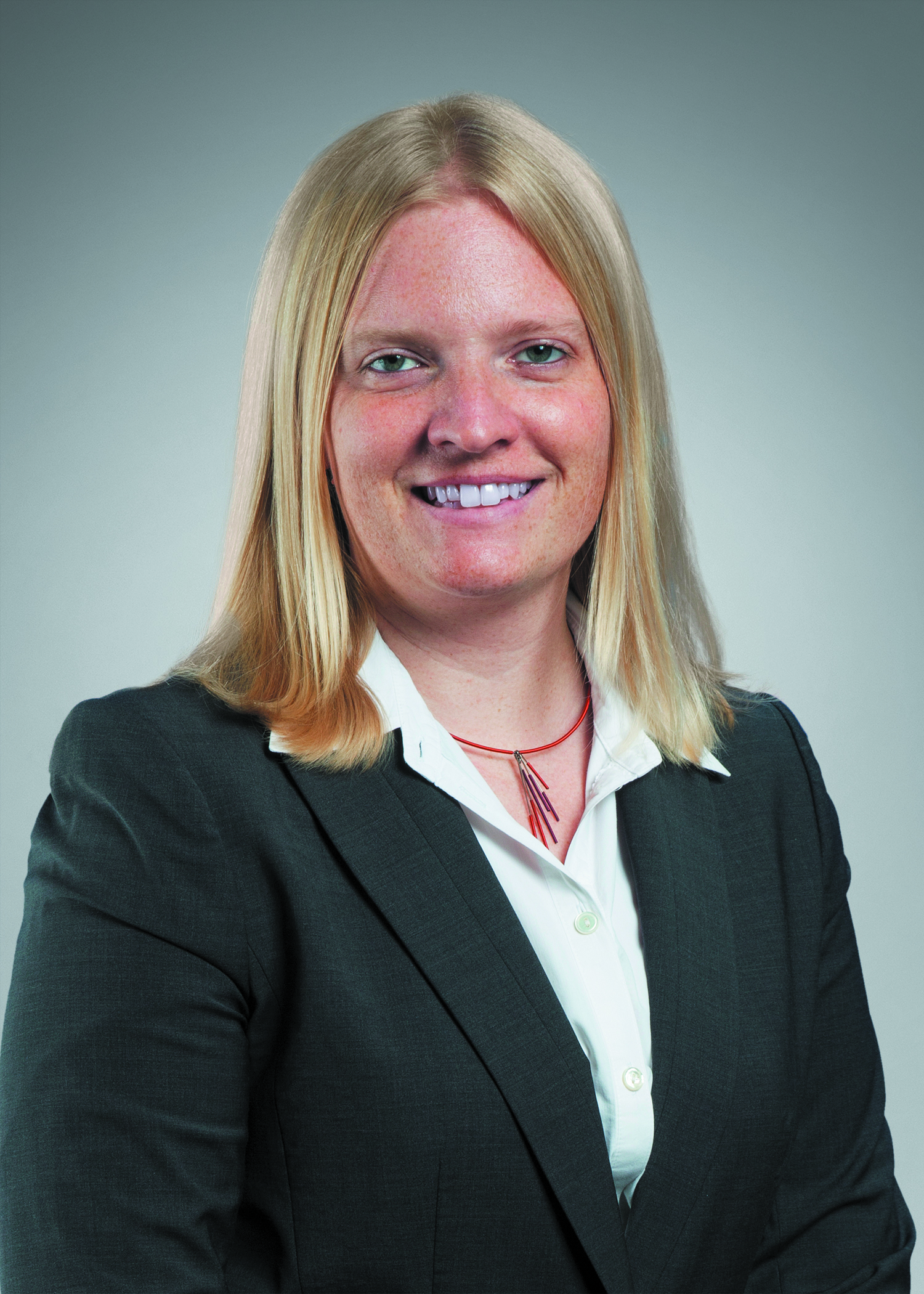
Alexa Hansen describes herself as a Hatch-Waxman litigator, which means she spends most of her time representing big pharmaceutical companies against other drug companies that want to release generic versions of her clients' drugs.
She has been successful. In August, she won a district court decision blocking generic versions of an epilepsy medicine made by her client UCB, a century-old Belgian drug maker. UCB Inc. v. Annora Pharma Private Ltd., 1:20-cv-00987 (D. Del., filed July 24, 2020).
A few months before that, she won a Federal Circuit ruling against generic versions of the psoriasis drug Otezla. Amgen Inc. v. Sandoz Inc, 22-1147 (Fed. Cir., dec'd April 19, 2023).
The key to her victories? "It's finding the story," she said. "It's like any case. You're trying to find the story among the facts that makes what you're trying to show compelling and understandable."
Hansen continued: "I mean, I can talk at length about the particular chemical modification made to the compound brivaracetam, but for someone who isn't a chemistry nerd like I am, that might not be so interesting."
Brivaracetam is the chemical name of UCB's anti-seizure drug Briviact, which Hansen protected. She can talk for hours about it because she spent a couple of years after college as a medicinal chemist for Merck, trying to develop anti-obesity drugs. She is named as an inventor on three patents.
Part of the interesting story behind Otezla, she said, is that it was developed from thalidomide, the anti-morning sickness drug that in the 1960s was discovered to result in severe birth defects.
Hansen can tell a similar story about another UCB drug, Fintepla, used to treat two severe forms of epilepsy. The same compound was part of the anti-obesity treatment called Fen-Phen that was pulled from the market in the late 1990s for causing cardiac problems. She recently settled litigation with two drug makers seeking to make generic versions of Fintepla.
She is the lead partner representing UCB regarding yet another epilepsy drug called Nayzilam, the first intranasally administered version of a certain anti-seizure medication. Post-trial arguments are expected soon in that case. UCB Inc. v. Cipla Ltd., 1:21-cv-01229 (D. Del., Filed Aug. 26, 2021).
In addition to Hatch-Waxman litigation, Hansen also advises clients on patents relating to product acquisitions and financial transactions. And sometimes helps her technology patent colleagues when they are struggling with chemistry-related IPRs at the Patent Office.
"I find that electrical engineers, when confronted with an organic molecule, sort of throw their hands up and run away," she said.
-- Don DeBenedictis
For reprint rights or to order a copy of your photo:
Email
Jeremy_Ellis@dailyjournal.com
for prices.
Direct dial: 213-229-5424
Send a letter to the editor:
Email: letters@dailyjournal.com